

How Financial Institutions Use Stablecoins for Real-Time Settlement
- Stablecoins give selected payment flows a near-continuous transfer layer. Local collection, conversion and payout still affect delivery time.
- On-chain confirmation is not the same as legal finality, interbank settlement or funds availability.
- A sound rollout starts with one corridor, clear control owners and tested exception paths.
Cross-border payments often pass through several correspondent banks. Each step adds a cut-off time, a ledger entry and another place to investigate errors. Treasury teams keep working balances in several accounts to cover those gaps. Operations teams then piece together status data from separate providers.
How financial institutions use stablecoins for real-time settlement is a narrower question than token transfer speed. Banks and payment firms use a stablecoin as the settlement asset for selected flows. Customers can still pay and receive familiar fiat currencies. The model works best where it joins compliance, conversion, local rails and reconciliation into one controlled process.
The useful comparison is not stablecoins against every bank rail. It is one complete payment route against another. Speed, cost, certainty and risk all change by corridor.
How Stablecoin Settlement Works at a Glance
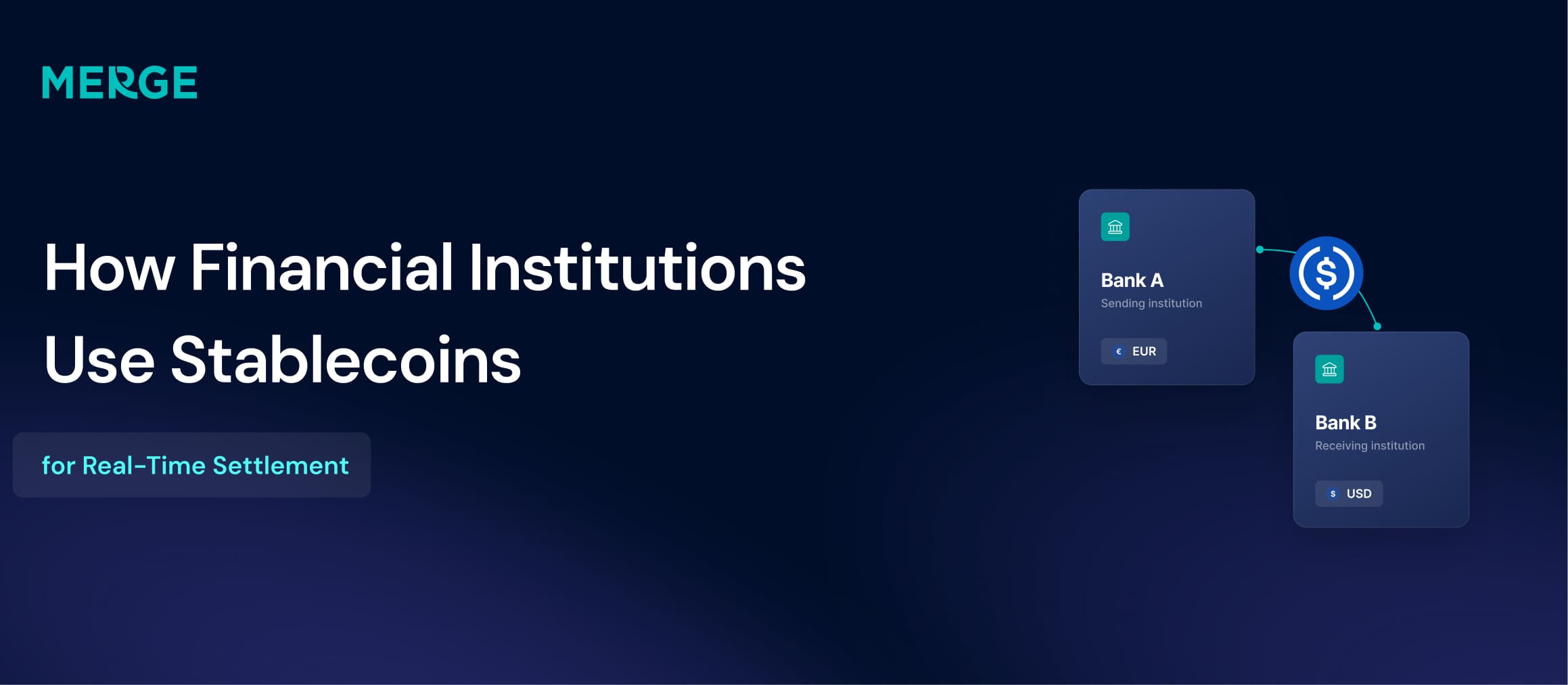
Financial institutions convert approved fiat funds into a payment stablecoin. They transfer value across an approved blockchain network, then redeem or convert the asset at the destination. The token acts as a bridge between the send and receive legs.
A common flow has five stages:
- The sender funds the payment in fiat.
- The institution runs customer, sanctions and payment checks.
- An approved provider converts the funds into a stablecoin.
- The stablecoin moves between permitted blockchain addresses.
- A provider redeems the asset, pays out local currency and matches the records.
This design can support transfers outside standard banking hours. It does not make every part of the payment real time. A local payout rail, screening alert, or redemption window can still hold up funds availability.
What “Real-Time Settlement” Actually Means
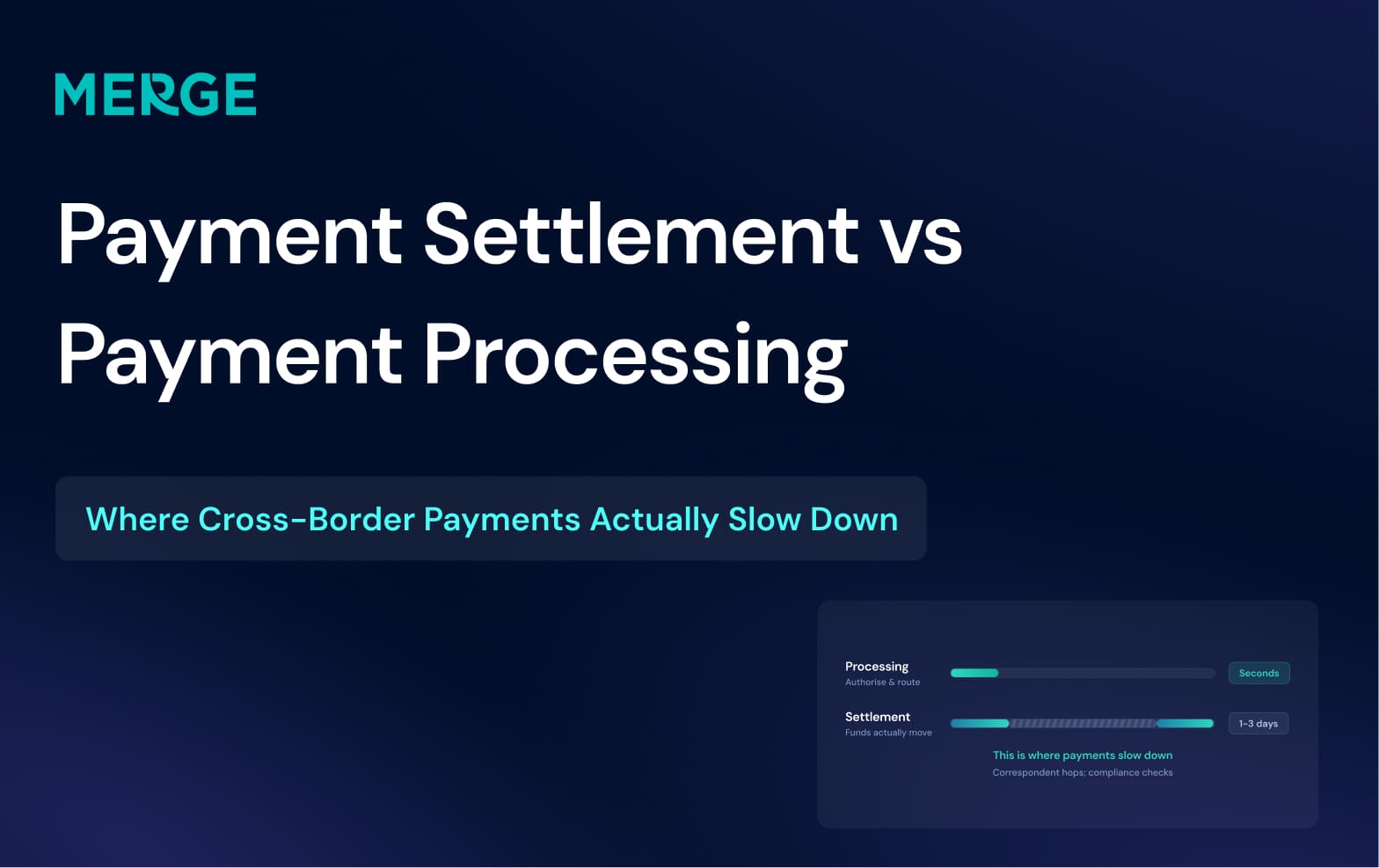
Payment teams need four separate clocks. A blockchain can confirm a transfer in seconds, yet the recipient can still wait for fiat. Legal finality follows the rules and law that govern the payment obligation. Interbank settlement concerns the obligation between participating institutions. Funds availability marks the point where the recipient can use the money.
Traditional real-time rails make the distinction clear. Fedwire is a real-time gross settlement system. Transfers are immediate, final and irrevocable after processing. Settlement takes place in central bank money. Its published service window runs on business days, with stated deadlines.
The US RTP network runs 24 hours a day, seven days a week. It clears and settles each payment in real time. Its rules give immediate finality and require swift funds availability, subject to limited exceptions.
Stablecoins do not replace real-time gross settlement across the board. They can complement domestic rails and correspondent banking in chosen cross-border workflows.
Stablecoin Settlement Solutions for Interbank Transfers Comparison
No single model wins every route. The table compares the settlement asset, main strength, main constraint and practical fit.
This stablecoin settlement solutions for interbank transfers comparison shows a core trade-off. RTGS offers central-bank-money settlement and established legal rules. A stablecoin offers broader operating hours and direct on-chain traceability. It brings exposure to an issuer, a blockchain network and redemption arrangements.
Correspondent banking can serve many currencies and institutions. Its chain can add fees, delays and repair work. A stablecoin route can shorten that chain, yet local collection and payout partners remain part of the payment.
Cost needs the same care. A cheap blockchain fee says little about the full route. Conversion spreads, local rail charges, compliance work and failed-payment handling shape the total. A faster route can reduce prefunding in one corridor, or move the funding need to a provider in another market.
How the Payment Flow Works in Practice
A controlled route links seven operational stages:
Fiat funding → screening → conversion → on-chain transfer → redemption → local payout → reconciliation
- Payment initiation. A customer or institution sends an instruction through an existing channel or API. The instruction carries the amount, currency, beneficiary and payment purpose.
- Verification and screening. The institution checks KYC or KYB records, sanctions, transaction risk and approved counterparties.
- Fiat funding. The sender’s money arrives through a bank account or local payment rail. The provider checks value date and usable balance.
- Conversion. An approved partner exchanges fiat for the chosen stablecoin. The institution records the quote, spread and execution time.
- On-chain transfer. Tokens move between permitted addresses. The team monitors the network, confirmation policy and address controls.
- Redemption and payout. The receiving provider converts the stablecoin into destination currency. A local rail delivers the fiat, or the recipient takes an approved stablecoin payout.
- Reconciliation. Operations staff match the internal ledger, provider record, bank entry and blockchain transaction.
- Exception handling. Defined queues cover screening holds, delayed redemptions, wrong details, API failures and rejected local payouts.
Merge’s Stablecoin API connects local fiat collection, conversion, blockchain transfer and local payout through one API. Webhooks and structured records give clients payment status and exception data. Merge acts as the payments and settlement layer. It does not replace a bank’s core system, licence, custody stack or governance.
A Risk Framework for Stablecoin Settlement Programs
A bank needs named owners, thresholds and evidence for each risk. The following six pillars form a practical risk framework for stablecoin settlement programs.
1. Legal and Regulatory Risk
Map the legal entity that performs each activity. Record the rules for the sender, recipient, issuer, converter and provider. State whether the institution issues, holds, converts or facilitates the asset. Take legal advice on payment finality, insolvency treatment and customer claims.
For US national banks and federal savings associations, OCC Interpretive Letter 1183 reaffirmed certain custody, reserve and distributed-ledger payment activities. The letter ties permissible activity to sound risk management.
2. Issuer and Redemption Risk
Review the issuer, reserve assets, attestations and redemption rights. Confirm the legal claim, redemption price and access terms. Test delayed or suspended redemption. The Financial Stability Board’s recommendations call for clear governance, risk controls, disclosures and timely redemption.
3. Liquidity and FX Risk
Name the conversion provider for each side. Set exposure, spread and slippage limits. Test quotes outside local market hours and during network stress. Track whether the route reduces prefunding or shifts it elsewhere. Keep a fallback rail for a loss of liquidity.
4. Financial-Crime and Sanctions Risk
Set controls for KYC, KYB, sanctions, wallet screening and transaction monitoring. Define counterparty and corridor limits. Route alerts to trained staff. Record the decision, evidence and escalation path for each blocked payment.
5. Technology and Operational Risk
Cover network outages, congestion, smart-contract faults, private keys, wallet permissions and API failure. Rehearse incorrect-address and irreversible-payment events. Monitor webhooks and ledger breaks. Give each exception a time limit and an accountable owner.
6. Third-Party Risk
Assess the issuer, custodian, liquidity provider, analytics firm, local payout partner and stablecoin payments platform. Contracts need audit rights, incident duties, data access and exit terms. The institution remains accountable for oversight.
Where the Model Can Create Value
Stablecoin rails fit flows with a clear timing or visibility problem. Common examples include:
- Cross-border B2B supplier and contractor payments
- Intercompany cash movement
- Treasury rebalancing between legal entities
- Marketplace or brokerage funding and withdrawals
- Payments initiated outside local banking hours
- Corridors with slow correspondent banking routes or weak status data
The rail can reduce hand-offs and give teams one on-chain reference. It can support just-in-time funding and release cash held against timing gaps. Those gains are corridor-specific. Local access, funding, compliance and reconciliation still decide the outcome.
For a deeper cost review, read Merge’s guide to enterprise stablecoin payments.
How to Choose Stablecoin Payments Infrastructure
A bank should assess the complete operating chain, not only the token or blockchain. Ask these questions:
- Which legal entity supplies each payment, conversion and payout service?
- Which countries, currencies, stablecoins, networks and local rails are live?
- Who owns each screening, monitoring and approval control?
- How does the provider assess issuer reserves and redemption access?
- How are fiat funds safeguarded and client balances separated?
- What happens after a payment is blocked, delayed or rejected?
- How do bank, ledger, provider and on-chain records match?
- Which audit trails, reports and raw data can the bank retrieve?
- What is the continuity and provider-exit plan?
A stablecoin payments platform should give technical detail and clear service boundaries. Strong stablecoin payments infrastructure joins fiat accounts, conversion, settlement, local payout and structured data. It does not replace institutional governance.
Merge’s on-ramp and off-ramp infrastructure supports fiat-to-stablecoin-to-fiat flows. Its product materials describe KYB, KYT, PEP and sanctions checks, webhook notices and dashboard records. Asset, network, corridor and entity coverage can change. Confirm the live scope during procurement.
A Five-Step Implementation Roadmap
- Choose one corridor. Start with a recurring flow that has clear delays, high repair work or heavy prefunding. Set measures for delivery time, failure rate, cost and manual touches.
- Set the operating model. Map legal scope, funds flow, ledger entries and control ownership. Define the completion point and funds availability for each leg.
- Complete due diligence. Review the issuer, payment provider, conversion partners, local partners and network.
- Test the hard cases. Run normal, blocked, delayed, duplicated, misaddressed and rejected payments. Prove the reconciliation and recovery steps.
- Run a limited pilot. Use value caps, approved counterparties and close monitoring. Expand only after the evidence meets the agreed measures.
Build One Controlled Corridor with Merge
Talk to Merge about designing a stablecoin corridor around your legal scope, funding model and payment controls. Start with the route where delays cost staff time and tie up cash. Measure the whole journey from instruction to usable funds. Then compare the pilot with the current bank route on identical terms. Explore its stablecoin payments infrastructure for accounts, conversion, settlement, local payouts and payment data.
This article provides general information, not legal, financial or operational advice. Obtain advice for each institution, product and jurisdiction.
FAQ
How do financial institutions use stablecoins for real-time settlement?

They convert fiat into an approved stablecoin, transfer it on-chain, then redeem or pay it out at the destination. Controls cover identity, sanctions, wallets, conversion and records.
Are stablecoin transfers always final?
No. Network confirmation does not by itself settle every legal obligation. Finality depends on governing law, scheme rules, issuer terms and each fiat leg.
Can stablecoins replace correspondent banking?
They can replace or shorten the cross-border leg in selected corridors. Banks still need local collection, payout, compliance and often existing banking relationships.
How do stablecoin routes compare for interbank transfers?
They offer broad operating hours and traceable transfers. RTGS offers central-bank-money settlement. Correspondent networks offer established reach. The best fit follows the asset, corridor and control model.
Can stablecoins reduce prefunding requirements?
Yes, in some routes. Near-continuous transfer can support later funding. The model can still require cash at the conversion or payout stage.
Disclaimer: This content is intended for informational purposes only. It should not be considered financial, legal, or operational advice. Businesses should evaluate their own compliance, regulatory, and infrastructure requirements before implementing payment solutions.


Ready to see what Merge can do for you?
Related Articles