Customers

Payment Infrastructure for Commodity Trading Firms

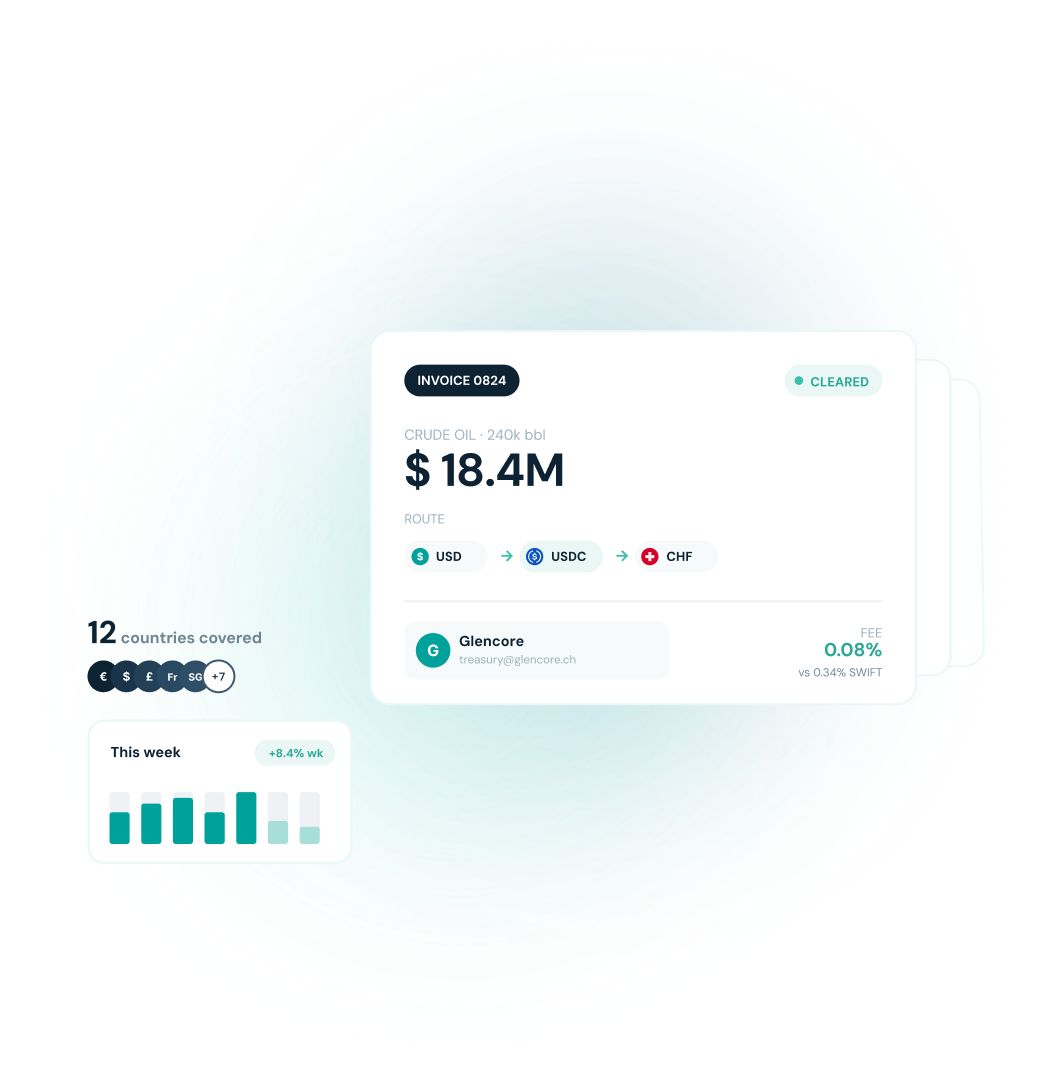
Merge provides payment infrastructure for commodity trading firms, FX execution, local rail routing, and stablecoin settlement so finance teams can move large-value payments across currencies and jurisdictions without correspondent banking delays.
Backed by the best

Specialised Settlement for Large, Time-Sensitive Trades

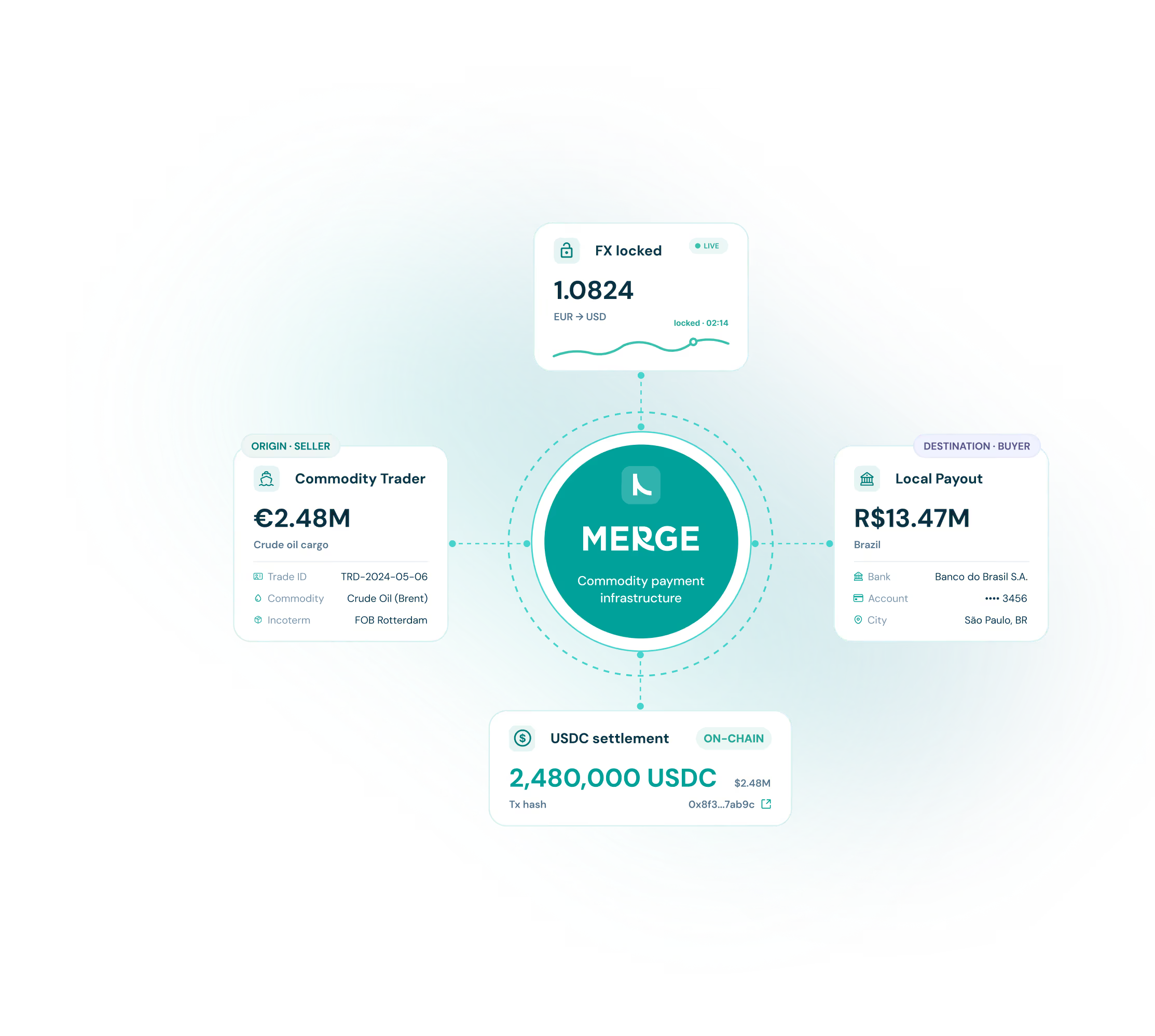
Commodity trading firms settle large, time-sensitive payments across countries and currencies. Correspondent banking adds delays, fees, and limited visibility. Merge supports the settlement layer by letting finance teams initiate payments, execute FX at a locked rate, and route funds through local rails or stablecoin settlement.

Friction Points Specific to Commodity Trading

Multi‑jurisdictional complexity
Each commercial deal spans different currencies and regulatory regimes. Payments must comply with local and international rules and still arrive on time.
Recurring high‑value flows
Commodity businesses settle large invoices, and margin calls weekly or even daily. Manual banking workflows are slow and error‑prone.
Friction Points Specific to Commodity Settlement

Local Rails, Stablecoin Settlement, and FX Execution

Overview of settlement flow options, how each one works, and the conditions where each is the best fit: local fiat rails, stablecoin settlement, and FX at the point of transaction.
Flow How it works Best fit
Local fiat rails
Uses domestic systems such as ACH, SEPA, RTP, FPS and many more.
Settling within the recipient's jurisdiction.
Stablecoin settlement
Sends value through blockchain rails where supported.
Faster settlement when banking routes are limited or slow.
FX at the point of transaction
Executes FX when the payment is initiated.
Fixing the amount before settlement.
Payment Execution, Not Trade Execution

Payment Execution, Not Trade Execution

Some firms may seek a commodity trading system, but Merge focuses on payment execution, not trade execution. It supports FX conversion, routing via fiat or stablecoin rails, payment tracking, and reconciliation, helping commodity businesses settle transactions without acting as an exchange, broker, or trade finance provider.

How Settlement Works: A Four-Step Payment Flow

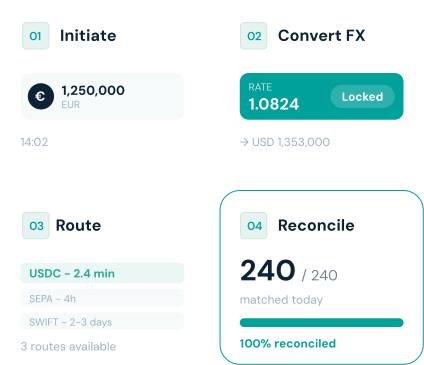
The commercial trade happens first. Once the price, quantity and delivery terms are agreed, finance teams need to move money. Merge handles the settlement leg in four steps:

Buyer initiates payment

The trading firm initiates payment in the originating currency using Merge’s dashboard or API. The amount, currencies, counterparty and settlement instructions are captured.

FX executed at the point of transaction

Merge executes the currency conversion at a locked rate, so the sending firm knows the exact cost and the receiving firm knows the exact amount to expect.

Funds routed through local rails or stablecoin settlement

Based on the corridor, currency, and recipient requirements, Merge routes payments through domestic payment systems or stablecoin rails.

Counterparty receives funds

The counterparty receives the payment in the agreed currency via local rails or stablecoin settlement. Payment status updates are available through the dashboard or API for reconciliation.

Reducing Correspondent Banking Friction in the Commodities Industry

Correspondent banking still slows down cross-border payments for commodity businesses, adding fees, delays, and limited visibility.

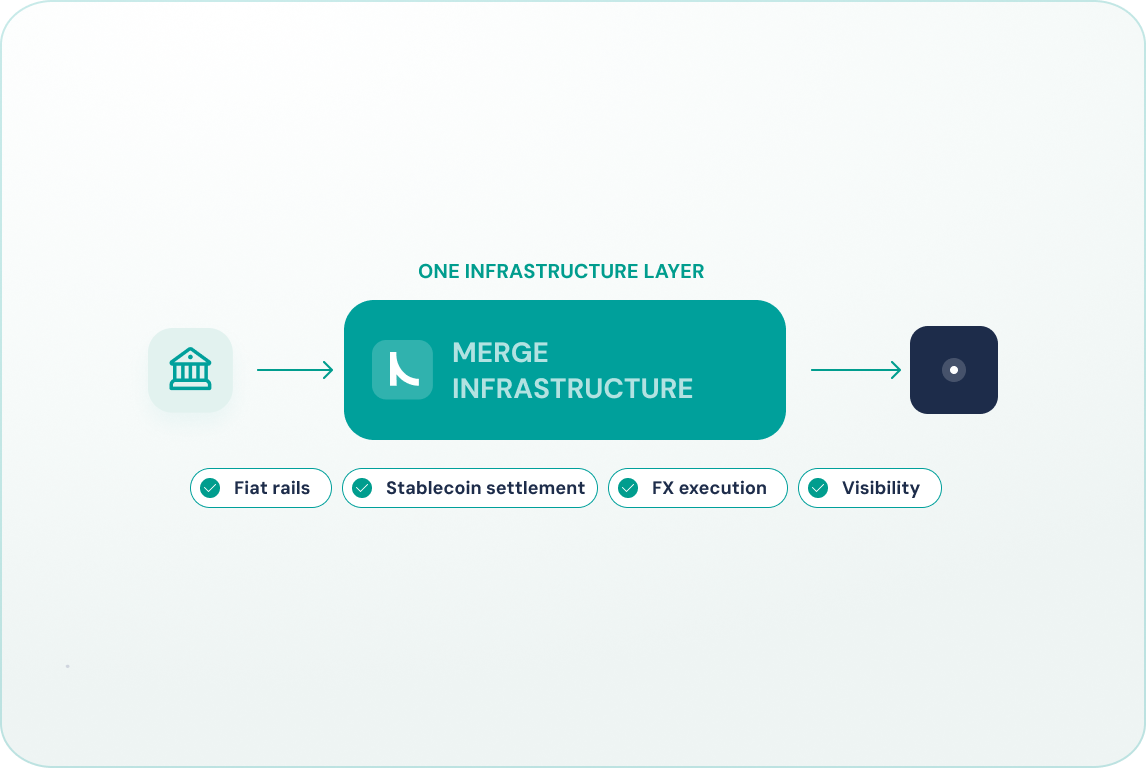
Merge simplifies settlement by combining fiat rails, stablecoin settlement, FX, and payment visibility into one infrastructure layer, enabling faster, more reliable global payments.

Reducing Correspondent - Merge Stablecoin Infrastructure

Payment Visibility and Reconciliation

Knowing where money is in transit matters as much as moving it. Commodity trading payments involve multiple counterparties and regulatory checks. Merge offers granular data to support timely decision-making.

01

API and dashboard visibility

Merge provides visibility across payment status, counterparty details, currency, amount, timestamp, and settlement route.

02

Reconciliation support

Structured payment data supports payment reconciliation so that trades and settlements can be matched automatically.

Use Cases for Commodity Trading Businesses

Commodity businesses have diverse payment needs. Here are common scenarios where Merge’s payment infrastructure adds value:

Physical commodity trading firms

Move large-value payments between buyers and sellers across countries, reducing reliance on correspondent banks.

Commodity brokers

Support payment flows between counterparties without building settlement infrastructure in every jurisdiction. Use multi-currency accounts to hold working capital across currencies.

Agricultural trading businesses

Settle payments with farmers, cooperatives, and logistics providers through local rails or stablecoin settlement. FX conversion at the point of payment reduces risk.

Energy trading businesses

Pay producers, refiners, and transport partners. Use stablecoin settlement when banking hours or time zones slow traditional transfers.

Commodity-focused financial intermediaries

Facilitate payments without offering trade finance or prime brokerage, using stablecoin on/off-ramps to convert between fiat and digital assets.

Global operating entities

Move funds between regional accounts and counterparties with structured data and clearer reconciliation, supporting treasury management across jurisdictions.

Built for High-Value Cross-Border Settlement

If your firm is settling physical trades across multiple jurisdictions, the gap between deal close and funds received is where friction lives. Merge removes that friction, handling FX execution, local rail routing, and stablecoin settlement so your finance team has visibility and control at every step.

FAQ

What is commodity trading?

Commodity trading means buying and selling physical or financial commodities, such as energy products, agricultural goods, and metals. Merge does not provide commodity trading services. It supports the payment execution and settlement layer for firms moving funds across currencies, counterparties, and jurisdictions after trade terms are agreed.

How does commodity trading work from a payment perspective?

After a buyer and seller agree on price, quantity and delivery, payment settlement begins. The buyer initiates a payment in the originating currency, Merge executes foreign exchange at a locked rate, routes funds through local rails or stablecoin settlement, and the counterparty receives funds in the agreed currency. This process focuses on moving money, not discovering prices or executing trades. Merge provides payment status visibility and reconciliation‑ready data throughout.

What is the commodity market definition?

A commodity market is a marketplace where raw materials or primary products are bought, sold or exchanged. These markets cover agricultural goods, energy products and metals. Merge does not operate a commodity market or offer price discovery. Its role is to provide payment infrastructure that supports settlement between commodity trading counterparties across currencies and jurisdictions.

Is Merge a commodity trading system?

No. Merge is not a commodity trading system for pricing, brokerage, trade finance or execution. It does not help firms trade commodities, manage contracts or provide credit. Merge supports payment infrastructure for commodity trading firms by helping them move funds across currencies and jurisdictions through FX execution, local payment rails, stablecoin settlement, and payment visibility. It sits alongside existing trading platforms and brokers, handling the settlement leg once commercial terms are set.

Does Merge support foreign exchange?

Merge executes FX at the point of payment initiation, so funds move from the originating currency to the agreed destination currency. It does not facilitate trading on FX markets or provide financial instrument execution.