Use Cases

The Infrastructure Behind Agentic AI Payments

The payment rails for the agentic economy. Programmable, stablecoin-native infrastructure built for AI agents that need to hold and move value, within client-defined controls and compliance guardrails.
Backed by the best

Agentic AI Payments for Programmable Value Movement

AI agents are moving from assisting with tasks to acting on behalf of businesses. When they book travel, procure services or perform treasury actions, they need controlled ways to pay. Agentic AI payments provide programmable value movement within a business’s rules and compliance framework.

Payment Automation Designed for AI‑Agent Workflows

Payment automation means AI agents preparing payment actions inside a controlled framework, aligned with client permissions, compliance rules, and treasury policies.

01
Triggerable actions
Payment initiation, treasury moves, on/off‑ramp conversions, and payout workflows trigger when predefined conditions are met.
02
Rules and approvals
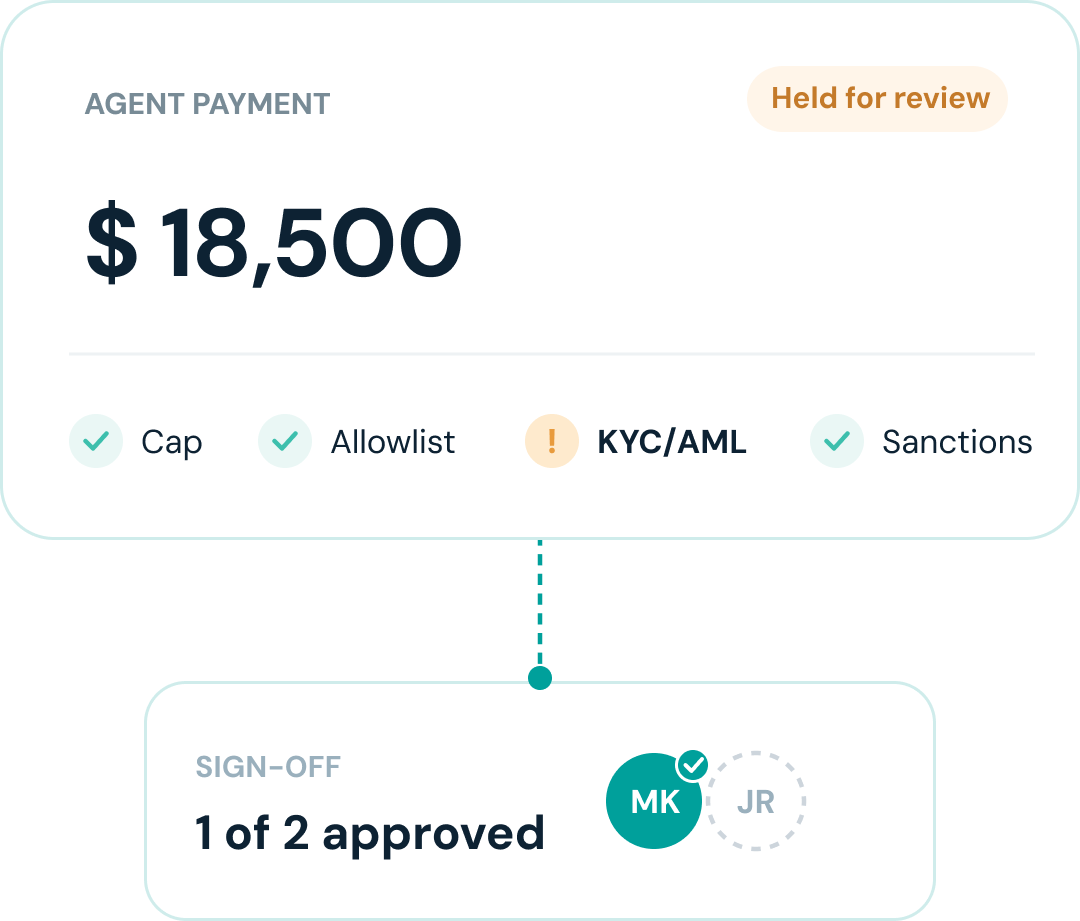
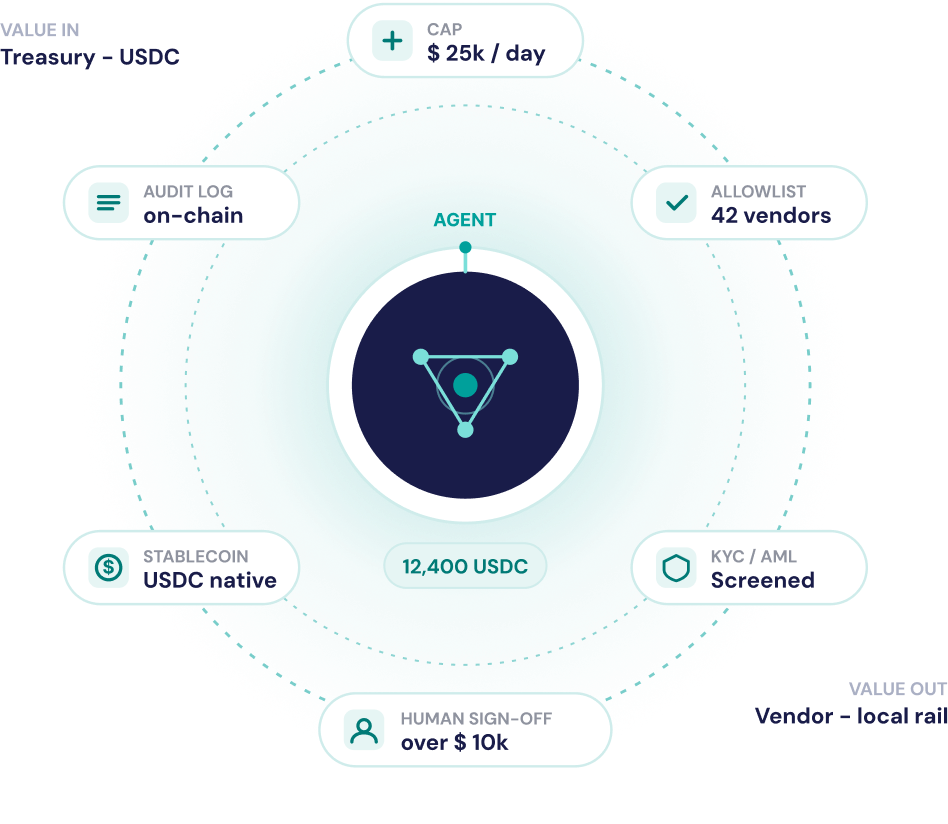
Clients configure spending limits, counterparties, and approval thresholds. Agents cannot freely move money.
03
Compliance at every step
Sanctions screening and customer due diligence obligations apply even with programmable rails.

Digital Payment Agent Needs a Stablecoin‑Native Infrastructure

Digital payment agents require a funding source that is programmable, global, and interoperable with software events. Stablecoins fulfil this role, digital tokens that maintain stable value and settle quickly across borders and time zones.

API‑native connectivity
Payment actions connect to software events via APIs. When an agent completes a task, a payment instruction can be created automatically within the client’s parameters.
Global reach
Stablecoin settlement is not tied to traditional banking hours, providing a programmable, 24/7 funding source for agents.

Agent Payments with Programmable Controls and Compliance Guardrails

Clients can enforce spending caps, counterparty allowlists, and approval thresholds at the wallet or account level. Sanctions screening, KYC/AML, and recordkeeping remain essential; agents operate under the client's compliance framework. Payments can require human approval or multiple sign‑offs based on amount or counterparty, ensuring large or unusual transactions cannot proceed without oversight.

Ready to See It in Action?

Talk to the Merge team and we'll configure the payment infrastructure that fits your use case.

Infrastructure for Secure Deployment of Autonomous Payment Agents

Overview of agent governance flows in stablecoin payment operations, covering permissions and monitoring alongside approval workflows, with explanations of what each flow means and why it matters.
Flow What it means Why it matters
Permissions and monitoring
Account-level permissions define which wallets, currencies, and counterparties agents can access. Real-time monitoring and audit trails track every action.
Maintains control and visibility across all agent activity.
Approval workflows
Agents can initiate payments, but settlement depends on configured approval logic. Transaction history and reconciliation data support review.
Ensures oversight before funds move and supports post-payment analysis.

Smart Contract Platforms and Agentic Payment Automation

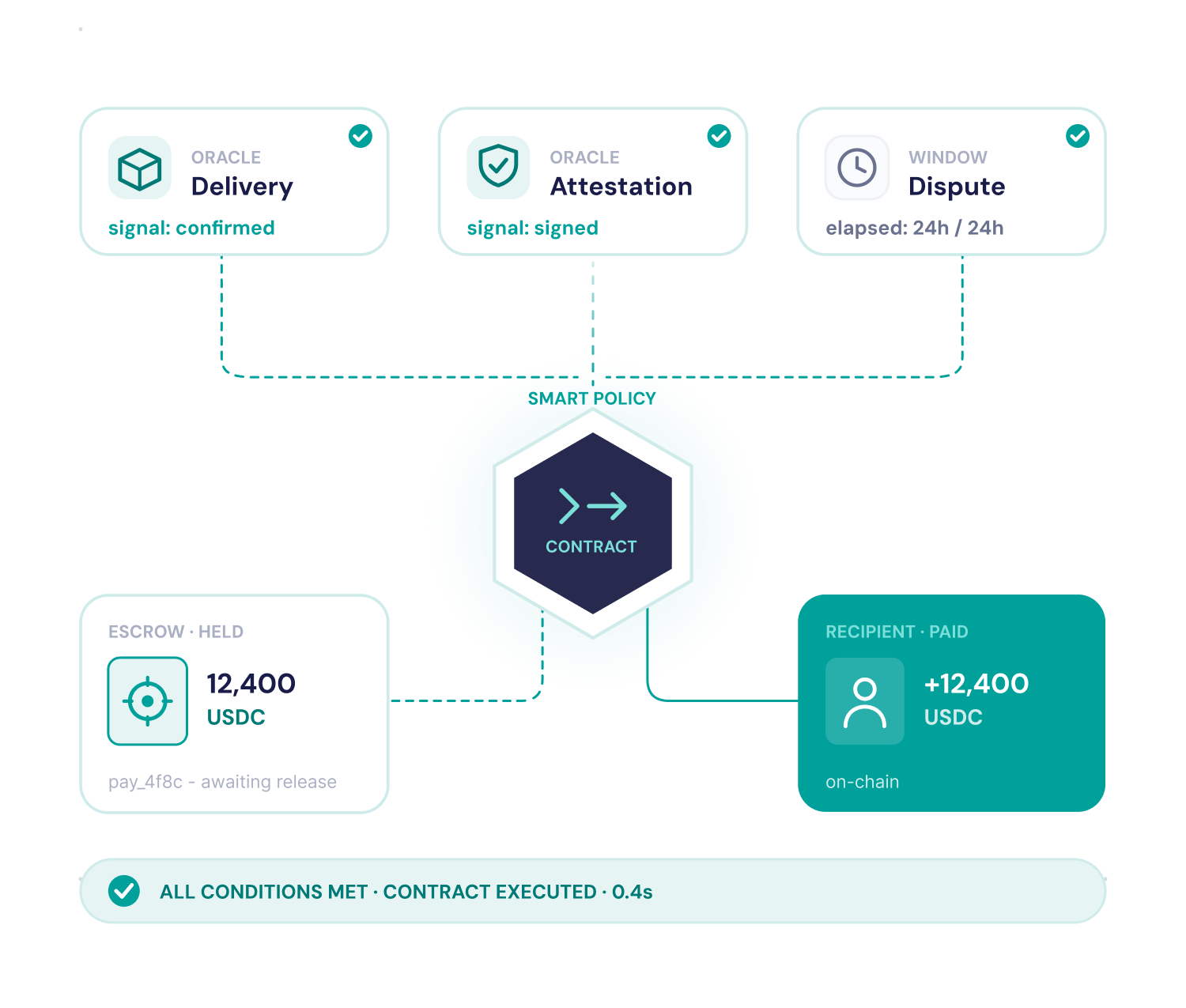
Smart contract logic may play a role in future agentic payment systems. In research, programmable compliance encodes payment conditions directly into smart contracts, combining stablecoin settlement with rule-based execution.

Transparent rules
Encoding policies on‑chain makes approval criteria visible and auditable. It distinguishes non‑interactive checks from interactive, evidence‑producing workflows.
Conditional payments
Smart contracts can enforce conditions such as escrow release when criteria are met.
The next evolution of payments
These concepts point toward a new class of agentic payment systems, where value moves instantly, intelligently, and across borders by design.
Smart Contract Platforms - Merge Money

Use Cases for Programmable Payments

Agent‑Assisted Payment Benefits for Enterprises

01
Faster workflow initiation
Agents can trigger payments immediately when conditions are met, reducing manual lag.
02
Fewer repetitive tasks
Routine payments can be automated, freeing staff to focus on exceptions and strategic finance.
03
Programmable approvals
Approval logic can be expressed programmatically, ensuring that compliance rules are applied consistently.
04
Continuous payment execution
Payments can be initiated and processed at any time, removing dependency on banking hours.

Technical Architecture in Financial Payment Systems

For technical teams thinking ahead about AI agent technical architecture in financial payment systems, the components below reflect how Merge envisions that infrastructure, not a description of current capabilities.

Overview of payment infrastructure components for agentic commerce, covering APIs and webhooks, stablecoin settlement, account permissions, and compliance and reconciliation, with what each component does and why it matters.
Component What it does Why it matters
APIs and webhooks
APIs connect agents to payment infrastructure; webhooks deliver real-time status updates.
Ensures systems have full visibility into payment activity.
Stablecoin settlement
Programmable stablecoin rails enable fast, global value movement.
Supports real-time, borderless payment workflows.
Account permissions
Clients define access, spending limits, and allowed counterparties.
Keeps agents operating within strict financial boundaries.
Compliance and reconciliation
Compliance checks and reconciliation data are integrated into workflows.
Enables auditability and accurate financial tracking.

Build for the Future of Agentic Payments

Start shaping how AI agents interact with value. Talk to Merge about infrastructure designed for controlled, programmable payment workflows.

FAQ

What are agentic AI payments?

Agentic AI payments are payment workflows where AI agents initiate, prepare or trigger financial actions inside predefined business rules. They depend on programmable stablecoin rails, API‑based infrastructure, client‑defined controls and compliance guardrails rather than open‑ended autonomous access to money movement.

What are the benefits of smart contract integration with agentic payments for businesses?

The benefits of smart contract integration with agentic payments for businesses may include clearer rules for conditional payment execution, stronger transparency around when funds can move, and better alignment between software events and payment logic. These advantages are conceptual; we do not claim current capabilities.

How does agentic AI improve payment reliability?

When agents operate inside controlled, rule-based workflows, payment instructions can be validated against permissions, counterparty allowlists and spending limits before initiation. This structured approach to payment preparation, rather than open-ended automation, is designed to reduce errors and support consistent exception handling over time.

What is agentic AI payments reconciliation?

Agentic AI payments reconciliation is the process of matching AI‑triggered payment activity against account balances, settlement records, approvals and internal finance data. For future agentic workflows, structured reconciliation data will be critical because enterprises need visibility into which payments were initiated, approved, settled, rejected or escalated for review.

How can businesses transition from traditional payments to agentic AI payments?

Businesses can transition from traditional payments to agentic AI payments by first defining controls, permissions, counterparties, spending limits, approval rules and reconciliation requirements. The shift should not begin with full autonomy; it should begin with controlled payment automation where AI agents operate inside client‑approved financial workflows.