Products

Payment Reconciliation System for Modern Finance Operations

A single, structured data source across all payment activity, including incoming, outgoing, balances, and settlement confirmations. Plug it into your existing finance stack and reconcile without chasing multiple portals.
Backed by the best

Automated Payment Reconciliation for Complex Payment Flows

Merge is infrastructure for automated payment reconciliation, not generic accounting software. It exposes clean payment data, clear sub‑account mapping and visibility across complex flows.

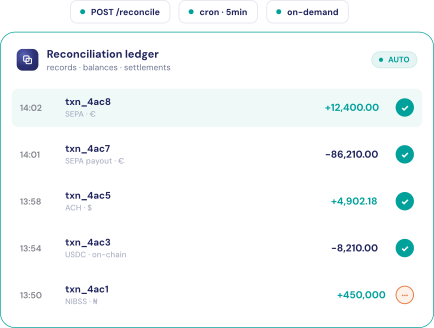
Run automated payment reconciliation via API triggers, scheduled jobs or on demand
Records, balances and blockchain-level settlement confirmations appear in a single structured layer
Integrate into existing systems without switching between bank portals
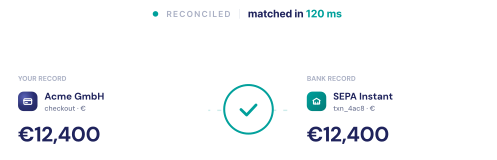
Unlike manual bank reconciliation, which requires finance teams to cross-check statements across multiple portals after settlement, Merge payment reconciliation matches transactions automatically at the point of confirmation.
Automated Payment Reconciliation for Complex Payment Flows

The Four-Step Reconciliation Process

Merge follows a four-step payment reconciliation process designed for finance and treasury teams:

Capture payment activity

Incoming and outgoing payment records, balances, and settlement confirmations flow through the Merge API, no manual statement collection required.

Map to named sub-accounts

Assign each payment to a sub-account by entity, counterparty, or cost centre so every transaction is tagged at source.

Match payment and settlement data

Use Merge's structured data layer to reconcile payments and settlements inside your own tools, accounting systems, or ERP workflows.

Surface unmatched payments

Exceptions appear through the API or dashboard for review, alerts, or escalation.

Automated Payment Reconciliation Tools for Multi-Location Operations

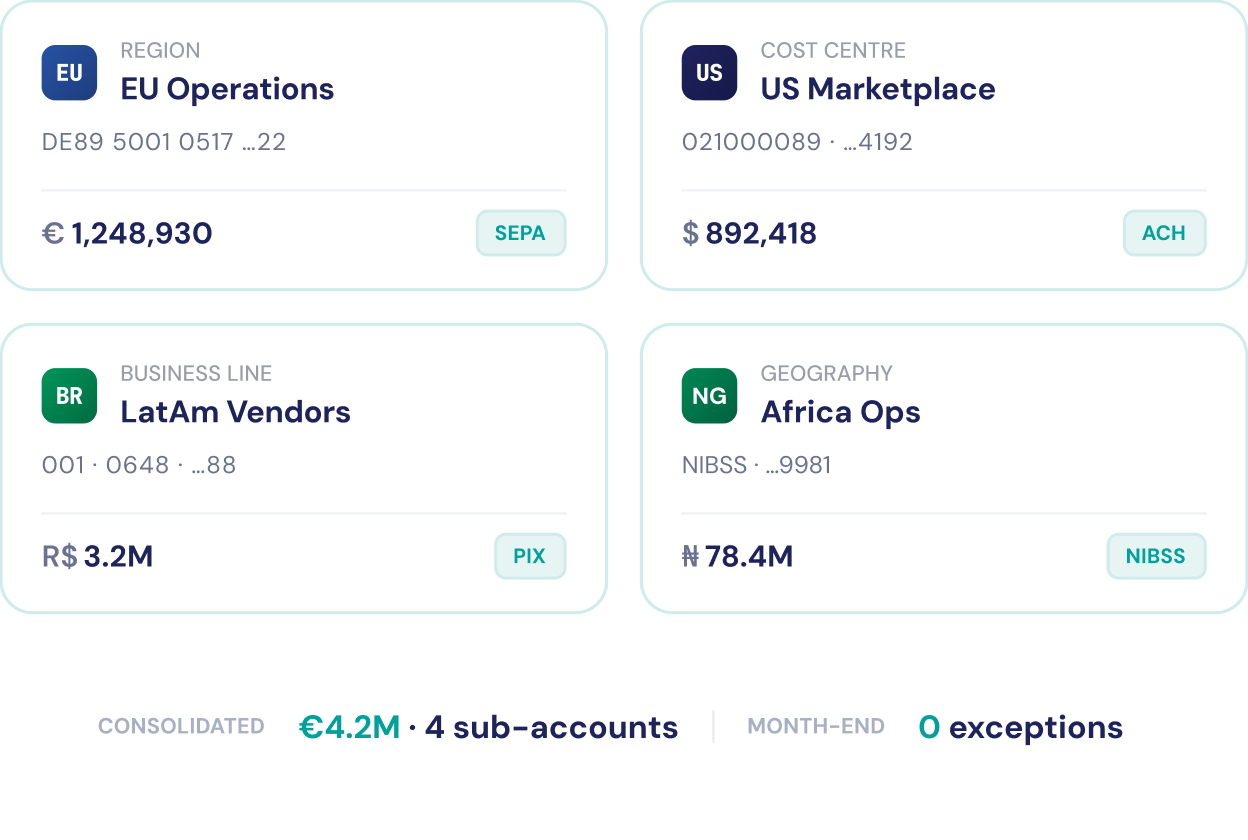
Multi‑location businesses need to reconcile activity across entities, regions and payment methods.

Named sub‑accounts, including dedicated IBANs or virtual account numbers per entity
Each account maps to a client, vendor, geography, business line or cost centre
Organises payment records upstream, reducing month‑end exceptions

Automated Remittance Reconciliation Tools for Third‑Party Payments

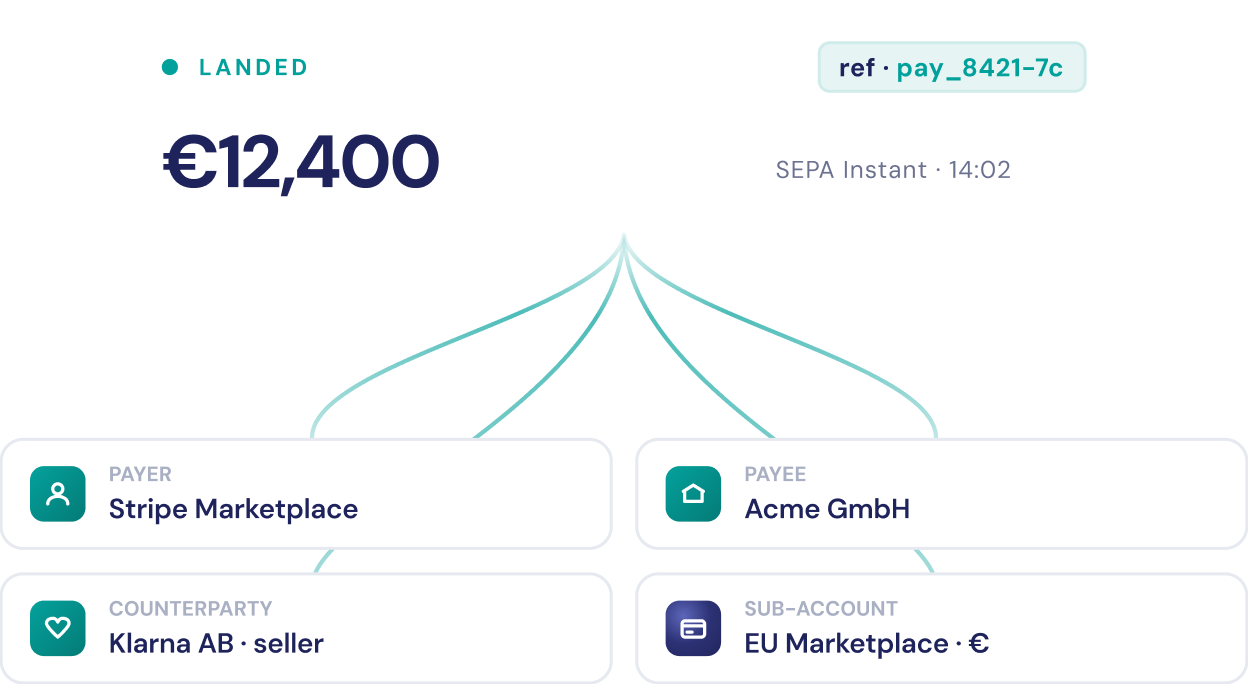
Platforms, marketplaces, PSPs, and payroll providers use Merge to reconcile third-party payouts. Automated remittance reconciliation links each payment to the payer, payee, counterparty, and sub-account, with dedicated identifiers enabling instant attribution and scalable, high-volume matching.

Ready to See It in Action?

Talk to the Merge team and we'll configure the payment infrastructure that fits your use case.

System with Flexible Triggers

Merge’s payment reconciliation system adapts to any schedule. Everything is API‑driven.

Event-triggered

Run reconciliation automatically when a payment is confirmed

Scheduled

Set daily, weekly or periodic reconciliation runs for finance teams

On demand

Initiate reconciliation manually at any time via the API or dashboard

Workflow-native

Slots into existing processes, no fixed operating model imposed

Clean Data for Finance and Reporting

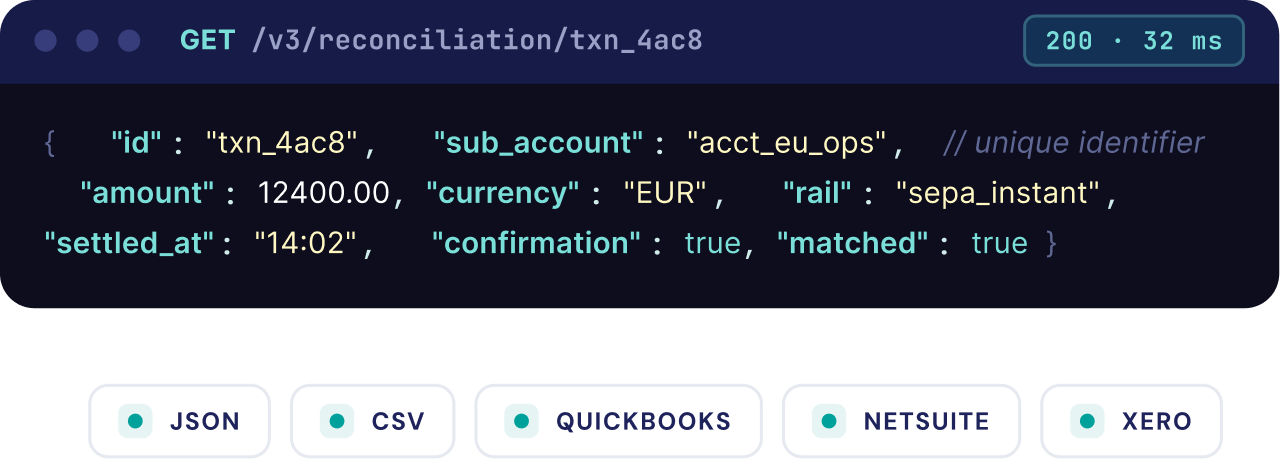
Merge exposes payment records, sub-account balances, and settlement confirmations through its API in a consistent format, supporting statement reconciliation and reporting across existing finance, accounting, and ERP workflows. Each sub-account acts as a unique payment identifier, enabling immediate matching without changing existing processes.

Exception Visibility When Payments Cannot Be Matched

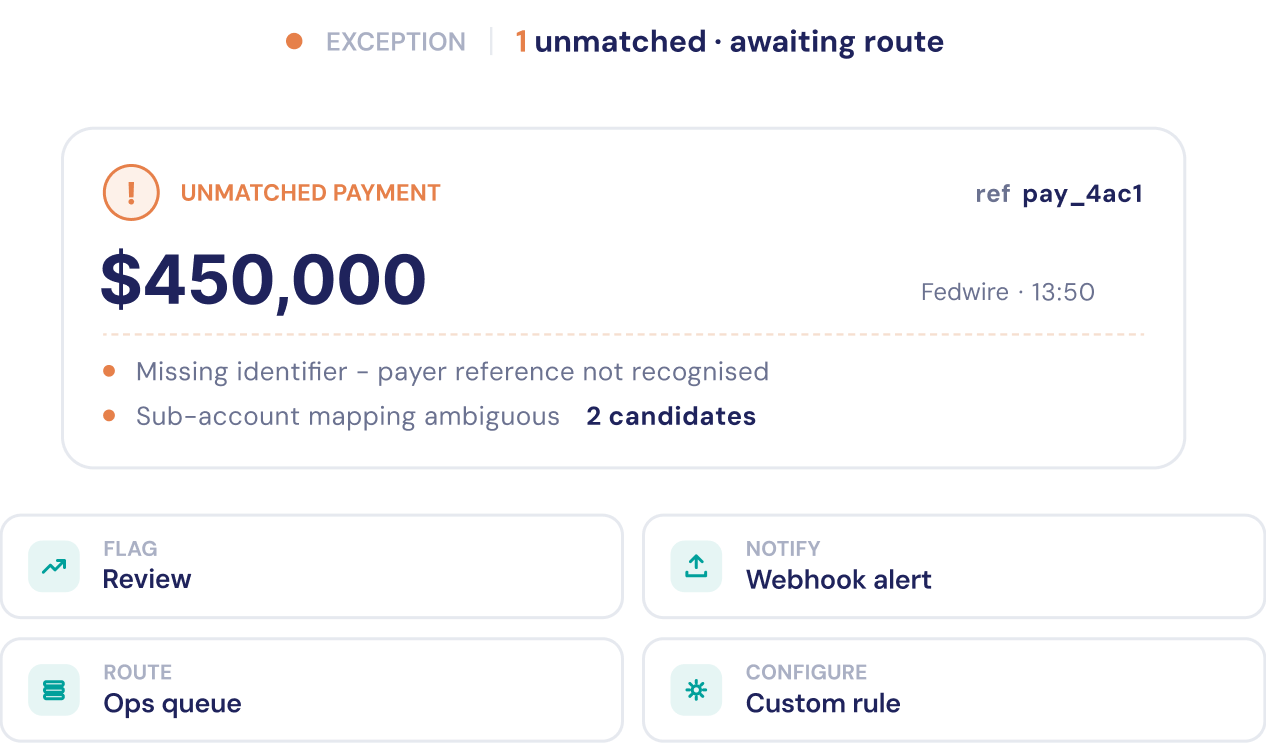
In Merge, unmatched payments surface as exceptions through the API and dashboard. Clients configure their own escalation rules.

Flag payments for manual review
Trigger webhook alerts for immediate notification
Route exceptions to a finance operations queue
Exception visibility and control, Merge does not impose a fixed exception workflow

How Merge Fits Your Industry

Fintechs & PSPs

Reconcile high volumes of incoming and outgoing payments across clients, payment methods, and settlement flows with greater visibility and less manual work.

Marketplaces

Assign dedicated sub-accounts to sellers, merchants or business units to track payouts and reconcile third-party payment activity more clearly.

Digital Assets

Match blockchain settlement confirmations with fiat balances and payment records through one structured reconciliation workflow.

Commodity Trading

Manage complex multi-entity payment flows across counterparties, currencies and accounts with clearer transaction mapping.

Financial Institutions

Structure reconciliation across internal entities, treasury operations and client payment activity without relying on fragmented banking portals.

AI Platforms

Handle global vendor payouts, usage-based billing flows and third-party payment operations with cleaner payment data and reporting visibility.

Payroll

Track salary disbursements, contractor payouts and settlement records across multiple accounts and counterparties.

Brokerages

Reconcile investor deposits, withdrawals and settlement activity with dedicated account structures and exception visibility.

Simplify Payment Reconciliation at Scale

Merge provides structured payment data, sub-account visibility, and exception control to accelerate reconciliation across complex flows, supporting high-volume payouts, multi-entity operations, and third-party settlements with less manual effort.

FAQ

What does reconcile mean in payments?

Reconciling payments means matching each payment record to balances, settlement confirmations and internal finance data. The goal is to confirm that money moving in or out of a business aligns with bank statements and other external reports, ensuring accurate records and highlighting transactions that need review.

What are reconciliations in finance operations?

In finance operations, reconciliations involve comparing internal transaction logs with bank statements, sub‑account balances and settlement data to verify amounts and identify discrepancies. By running reconciliations regularly, teams catch missing references, duplicate records, delayed settlements and exceptions for manual review.

How is payment reconciliation triggered in Merge?

Payment reconciliation in Merge is API‑driven and flexible. Clients configure reconciliation to run automatically from events like payment confirmation, on a schedule or manually. Merge supports multiple triggers so teams can integrate reconciliation into their existing finance and treasury workflows.

What data sources does Merge use for automated payment reconciliation?

Merge exposes a unified data layer across incoming and outgoing payment records, sub‑account balances and settlement confirmations. Each dedicated IBAN or virtual account number directs funds into a specific sub‑account, making attribution immediate. Clients consume this structured data through the API and use it in their own systems.


What happens when a payment cannot be matched?

Unmatched payments appear as exceptions through the API and dashboard. Clients configure their own escalation rules, flagging a payment for manual review, triggering a webhook alert or routing it to a finance operations queue. Merge provides exception visibility and control rather than imposing a fixed workflow.