Customers
Payment Infrastructure for Marketplaces
Merge provides the payment infrastructure layer for marketplaces, enabling buyer collections, fund segregation, and seller payouts across currencies and regions through a single integration.
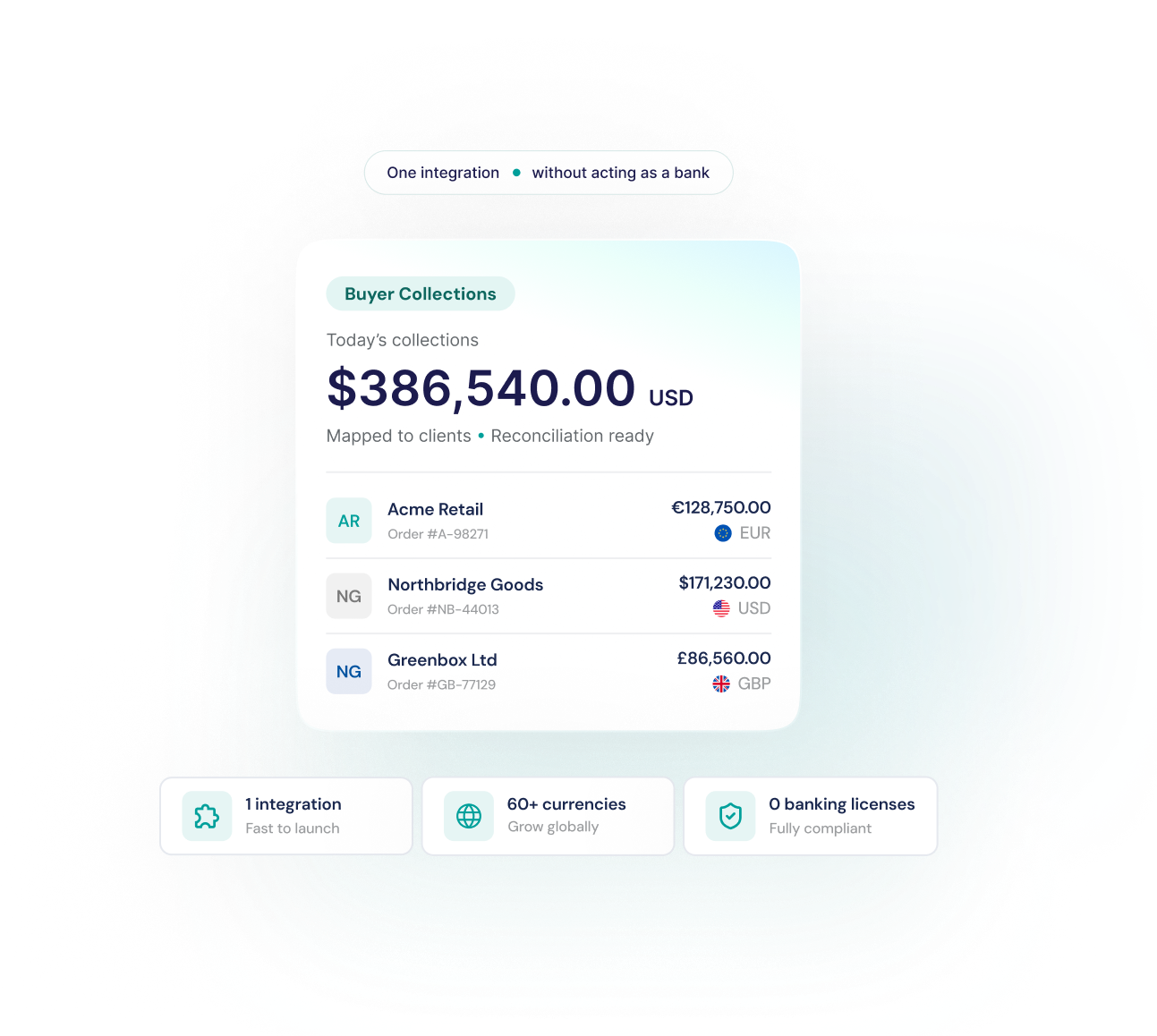


A marketplace connects buyers with multiple sellers, typically earning through commissions or fees. Behind this, payments are more complex, funds must be collected, safeguarded, tracked, and paid out across sellers, currencies, and regions, while keeping buyer money separate from platform funds.
Merge provides sub-accounts, IBANs, fiat and stablecoin settlement, and structured data so teams can build compliant flows without becoming a bank.

The buyer pays into the marketplace platform. Because marketplaces connect buyers and sellers, the platform must direct each payment to the right seller and order.

Under e-money rules, funds are safeguarded in segregated sub-accounts, kept separate, traceable, and clearly allocated between buyer payments and seller balances.

Seller payouts can be triggered by order completion, dispute resolution, or scheduled cycles, with configurable logic, amounts, timestamps, and counterparty details exposed via API.

Sellers can receive funds in local fiat or stablecoins. Stablecoins enable cross-border transfers over blockchains, settling in minutes with minimal fees.
Why it matters?
In multi-seller environments, funds need to be clearly separated and traceable across buyers, sellers, and platform operations.
How Merge supports it
Merge provisions named virtual accounts and IBANs for buyers and sellers, improving payment reconciliation, fund visibility, and transaction tracking.
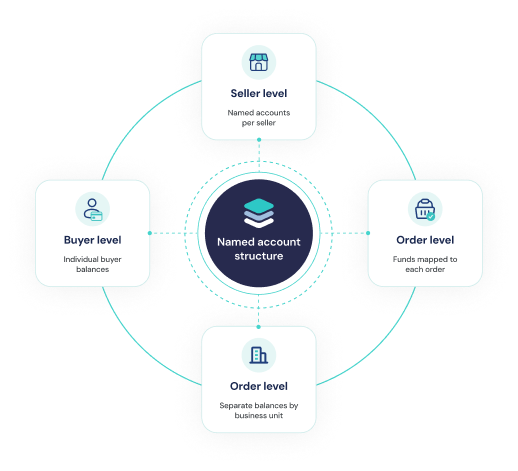
Payment reconciliation is complex and manual. Platforms process sales, returns, and adjustments, then compute ledgers and settle periodically, relying on timely, complete, and consistent data for accuracy.
| Feature | Description |
|---|---|
|
Sub-accounts linked to orders or sellers
|
Payments are structured through sub-accounts, reducing manual workload.
|
|
Structural matching, not manual
|
Each payment routes into a named account, so matching happens automatically.
|
|
Full payment data via API
|
Access amounts, timestamps, counterparties, balances, and settlement status.
|
Stablecoins are fiat-pegged cryptocurrencies that enable direct, bank-free cross-border payments to digital wallets, settling in seconds or minutes with full transparency.


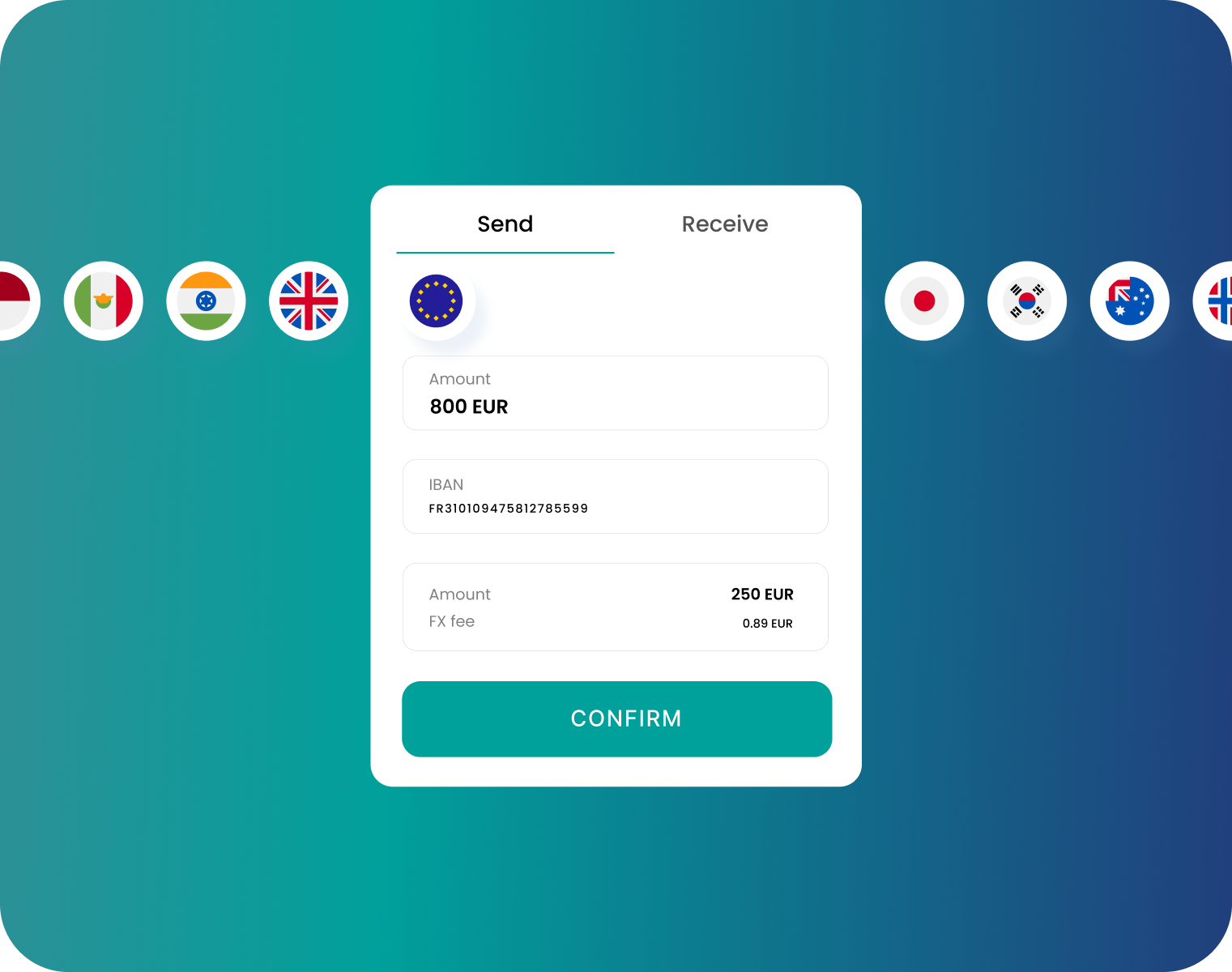
For modern e-commerce and digital marketplace platforms, the challenge is not accepting crypto payments, it is managing how funds move across buyers, sellers, fiat currencies, and stablecoin settlement flows.
Merge provides the infrastructure layer for account segregation, fiat-to-stablecoin settlement, seller payouts, and reconciliation across cross-border payment operations.
Merge's architecture is designed for scale: high transaction throughput, large numbers of sub‑accounts, and multi‑currency payment flows without performance degradation.



Merge brings account infrastructure, settlement, and payment data into one layer, replacing:


Card acquiring, banking relationships, and compliance or fraud tooling remain with the marketplace and its providers.
Payment reconciliation is complex and manual. Platforms process sales, returns, and adjustments, then compute ledgers and settle periodically, relying on timely, complete, and consistent data for accuracy.
| Feature | Description |
|---|---|
|
Seller payouts
|
Pay sellers across regions in local fiat currency or stablecoins, based on corridor and recipient setup.
|
|
Buyer collections
|
Collect buyer funds into structured, safeguarded sub-accounts mapped to orders or sellers.
|
|
Named seller accounts
|
Provision dedicated sub-accounts, IBANs, or virtual accounts for each seller to improve visibility and simplify reconciliation.
|
|
Cross-border settlement
|
Use fiat and stablecoin settlement rails to move funds across currencies and geographies.
|
|
Reconciliation data
|
Access structured payment data via API and dashboards to match payments, balances, and payouts.
|
|
Multi-party payment flows
|
Collect, hold, split, and pay out funds based on platform-defined triggers and workflows.
|
Collect, safeguard, and pay out funds with structured sub-accounts, flexible settlement, and clear reconciliation data. Merge helps you run reliable payment flows across sellers, currencies, and regions, without fragmented infrastructure.

A marketplace is a digital platform that connects buyers and multiple third‑party sellers. In a payment context, a marketplace usually needs to collect buyer funds, separate seller balances, trigger payouts and reconcile activity across orders, sellers, currencies and regions. Merge provides the infrastructure to manage these payment flows.
A business marketplace is a platform where businesses, sellers, vendors or service providers transact with buyers through a shared digital environment. For payments, the marketplace must manage collections, fund segregation, seller payouts, settlement timing and reconciliation. Merge supports the infrastructure behind these flows so operators can handle multi‑party payment operations without building them from scratch.
Marketplaces can accept cryptocurrency payments if their checkout, compliance and payment setup support that model. Merge is not positioned as a simple crypto checkout provider; its strength lies in marketplace payment infrastructure: fiat‑stablecoin settlement, seller payout flows, named accounts and reconciliation data across currencies and regions. Platforms interested in crypto checkout should integrate suitable payment service providers while using Merge for account structure and settlement.
Stablecoins can make cross‑border marketplace payments faster and cheaper. Stablecoin cross‑border payments move value directly to recipients’ digital wallets without bank intermediaries, completing in minutes and costing only a few cents. A marketplace can collect funds in one currency, settle value through stablecoin infrastructure and pay a seller in another currency or directly in stablecoins, depending on configuration and market support.
Merge simplifies reconciliation by structuring payments through named sub‑accounts linked to sellers, buyers or orders. Its API exposes amounts, timestamps, counterparty details and sub‑account balances, giving marketplace teams clean data to automate reconciliation. By reducing manual matching across multiple systems, Merge lets finance teams focus on exceptions rather than routine reconciliation tasks.


