Customers

The Programmable Payment Layer for AI Platforms

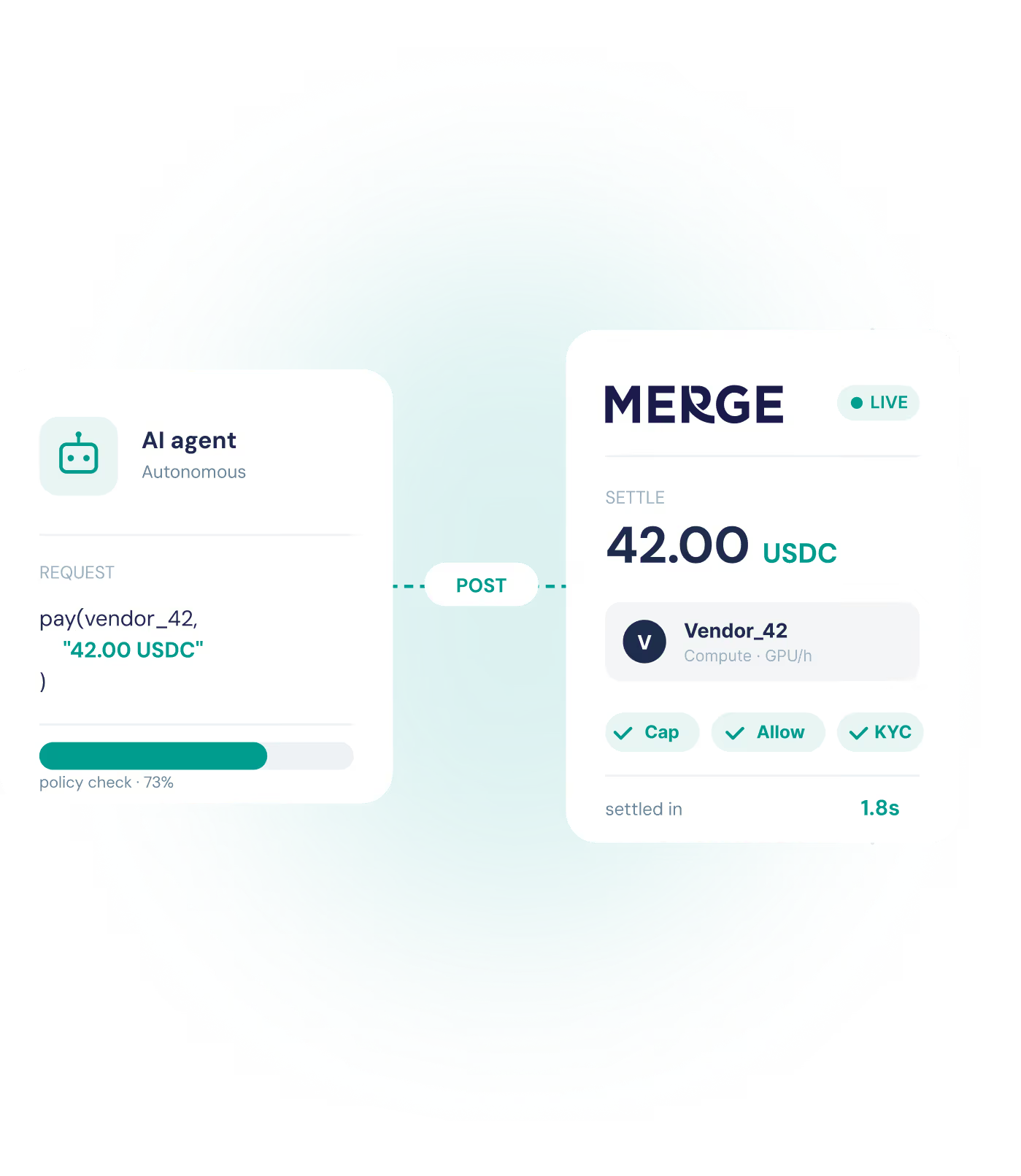
AI platforms are preparing for a future where agents transact autonomously. Merge provides the stablecoin-native payment infrastructure to make that possible, programmable, compliant, and built for global scale.
Backed by the best

Autonomous AI and the Need for Native Payment Rails

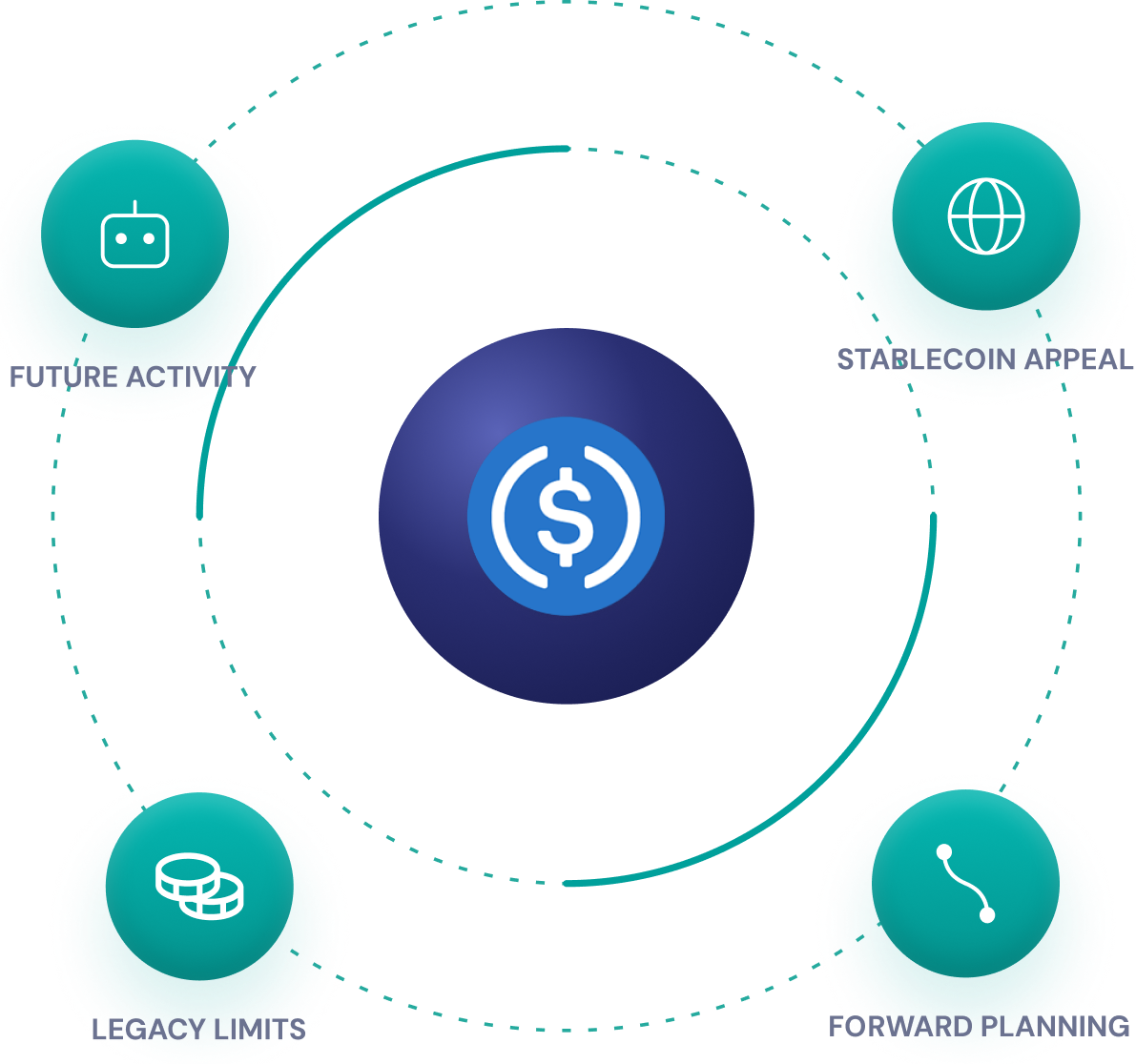
Agentic AI refers to systems that plan, decide, and act. As AI platforms mature, they require a dedicated financial layer. Traditional rails support human workflows, not software-native value movement or automated payments. The shift to autonomous action is driving demand for agentic AI payments. Key reasons include:

Future agent activity
Agents may pay for compute, data, APIs or digital goods without human approval
Legacy limitations
Manual onboarding and reconciliation make automated payments at scale impractical
Stablecoin appeal
Programmable, global and API‑accessible stablecoins move value across borders without intermediaries.
Forward planning
Platforms must prepare for how the agent will access funds, operate within controls, and execute payments as autonomy increases.
Autonomous AI and the Need for Native Payment Rails

Stablecoin Wallets for Agent Payment Flows

Stablecoin wallets act as programmable payment primitives for AI agents, combining digital asset programmability with fiat stability. Benefits include:

Programmatic value movement

Fund, monitor and govern wallets via API rules while keeping payments inside set limits.

Global reach

Stablecoins aren’t tied to one jurisdiction, enabling seamless cross‑border agent payments.

Control and visibility

Platforms set spending caps, designate counterparties, get real‑time alerts when an agent transacts.

Separation of concerns

The platform defines agent logic while the wallet handles settlement, making payments safer.

Merge’s direction is to support AI platforms with wallet infrastructure that sits behind the agent experience while the client sets permissions, limits and approval rules.

Controlled Payments for AI Platforms

Autonomy requires oversight. AI platforms must define how agents spend and ensure compliance. A robust payment system should support:

Overview of payment control mechanisms and how each one works: spending limits, counterparty rules, approval flows, programmable controls, and shared compliance.
Control mechanism How it works
Spending limits
Per-transaction or daily caps prevent runaway spending.
Counterparty rules
Restrict payments to approved categories to keep payments safe.
Approval flows
Trigger human or algorithmic approval when thresholds are crossed.
Programmable controls
Use API-driven logic to block or allow payments based on context.
Shared compliance
Merge provides infrastructure while the client retains governance.

These features are essential for digital agents. With these guardrails, autonomous payments stay responsible.

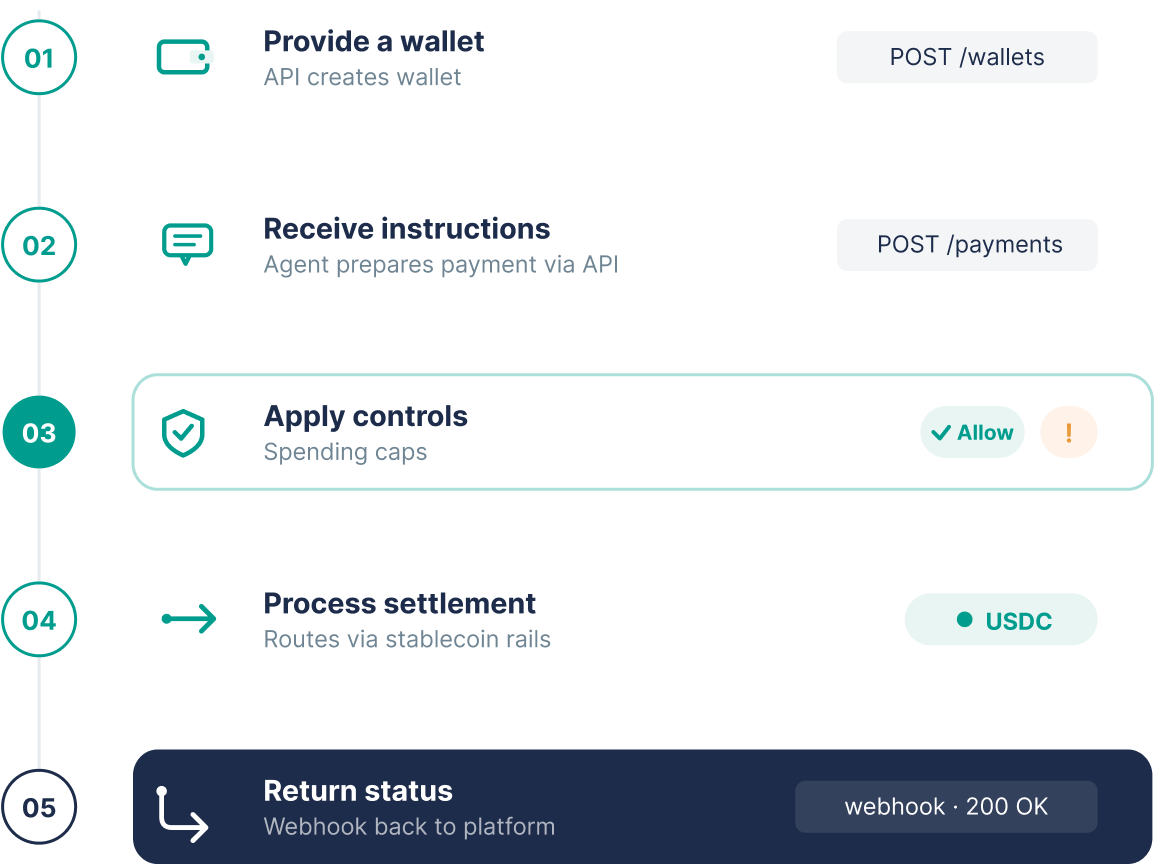
How an AI Platform Payment Flow Works

01
Provide a wallet
The platform uses an API to create a wallet; funding comes from the treasury.
02
Receive instructions
The agent prepares a payment for services or value transfer via API.
03
Apply controls
Spending limits, rules and approvals decide if the payment proceeds.
04
Process
Approved transactions route through stablecoin payment rails; settlement occurs quickly.
05
Return status
Status and details return via webhook so the platform can reconcile.
How an AI Platform Payment Flow Works

Examples for Payment and Value Movement


Compute and API access

Agents pay for compute, model APIs, or data without human delays

Agent marketplaces

Agents earn stablecoins for tasks and spend them inside AI-native ecosystems

Autonomous treasury workflows

Agents rebalance funds across accounts based on limits, thresholds, or schedules

AI-native commerce

Value moves between agents, services, and counterparties when traditional rails are too slow

Digital payment agents

Software agents handle micro-payments and agent pay tasks in digital economies

Trust and Compliance for Autonomous Payments

Trust and compliance are critical. For AI platforms preparing for autonomous payments, consider:

Overview of compliance and security control mechanisms used in agentic payments infrastructure: regulatory licences, AML/KYC infrastructure, clear contracts, and security and reconciliation.
Control mechanism What it covers
Regulatory licences
Payment execution and virtual asset services across multiple jurisdictions
AML/KYC infrastructure
Transaction monitoring and compliance checks via partners like Elliptic and Notabene
Clear contracts
Defined responsibilities between Merge and the client; the platform is accountable for agent behaviour
Security and reconciliation
Controlled access, encryption, audit logs, and reporting to match settlement with records

Regulated infrastructure and defined responsibilities will underpin autonomous payments.

Use Cases for AI Platforms

Conceptual use cases show where autonomous payments could matter:

AI platforms

Build native financial layers for agents to access stablecoin wallets and move value through controlled rails.

Agent marketplaces

Support ecosystems where agents earn, hold and transfer value; automate micro‑transactions.

AI infrastructure providers

Prepare for payment flows tied to compute, APIs, models, data or services via embedded payment infrastructure.

Fintech‑AI products

Develop workflows where agent activity links to payments, settlement and reconciliation.

Autonomous treasury tools

Let agents move balances based on thresholds; see treasury management workflows.

Digital asset platforms

Connect stablecoin payment flows with emerging autonomous agent use cases; see digital asset platforms.

Build the Payment Layer Your AI Platform Will Need

Prepare for agentic AI with a stablecoin infrastructure designed for control, compliance, and seamless value movement across autonomous agent workflows globally.

FAQ

What is commodity trading?

Commodity trading means buying and selling physical or financial commodities, such as energy products, agricultural goods, and metals. Merge does not provide commodity trading services. It supports the payment execution and settlement layer for firms moving funds across currencies, counterparties, and jurisdictions after trade terms are agreed.

How does commodity trading work from a payment perspective?

After a buyer and seller agree on price, quantity and delivery, payment settlement begins. The buyer initiates a payment in the originating currency, Merge executes foreign exchange at a locked rate, routes funds through local rails or stablecoin settlement, and the counterparty receives funds in the agreed currency. This process focuses on moving money, not discovering prices or executing trades. Merge provides payment status visibility and reconciliation‑ready data throughout.

What is the commodity market definition?

A commodity market is a marketplace where raw materials or primary products are bought, sold or exchanged. These markets cover agricultural goods, energy products and metals. Merge does not operate a commodity market or offer price discovery. Its role is to provide payment infrastructure that supports settlement between commodity trading counterparties across currencies and jurisdictions.

Is Merge a commodity trading system?

No. Merge is not a commodity trading system for pricing, brokerage, trade finance or execution. It does not help firms trade commodities, manage contracts or provide credit. Merge supports payment infrastructure for commodity trading firms by helping them move funds across currencies and jurisdictions through FX execution, local payment rails, stablecoin settlement, and payment visibility. It sits alongside existing trading platforms and brokers, handling the settlement leg once commercial terms are set.

Does Merge support foreign exchange?

Merge executes FX at the point of payment initiation, so funds move from the originating currency to the agreed destination currency. It does not facilitate trading on FX markets or provide financial instrument execution.