

Best Cross-Border Payment APIs: Top Options for Global Payments (2026)
- The global cross‑border payments market is vast, topping $194 trillion in 2024.
- Modern providers fall into two camps: traditional fiat rails such as SWIFT and local bank networks, and fast‑settling stablecoin rails.
- Merge sits at the intersection of both. Its API offers regulated on‑chain settlement with built‑in compliance and traditional local payouts, making it the most flexible option for fintech builders.
Building a product that sends money across borders is no longer just about connecting to a bank. Developers now have to choose between traditional payment rails, local payment networks, stablecoin settlement, embedded FX, and compliance tools. The wrong choice can mean higher costs, longer settlement times, and months of extra engineering work.
The global cross-border payments market is expected to reach around $194 trillion in annual payment flows, and demand for faster, lower-cost international transfers continues to grow. At the same time, new infrastructure has changed what developers can build. A modern cross border payments API can handle collections, payouts, compliance, reconciliation, and stablecoin settlement through a single integration.
Still, not every cross border payment API is built for the same purpose. Some focus on consumer remittances. Others serve enterprise treasury or marketplace payouts. This guide compares the best APIs for cross-border payments in 2026, looking at integration quality, settlement speed, compliance, corridor coverage, stablecoin support, and the developer experience behind each platform.
What Makes a Great Cross‑Border Payment API?
The best cross border payment APIs combine fast settlement, clear FX pricing, broad corridor coverage and a compliance layer that frees engineers from regulatory complexity. Beyond a list of countries, developers need reliable webhooks, sandbox environments and clear docs. A good international payment API hides complexity yet gives full control.
Settlement speed can range from near‑instant (stablecoins) to T+2 on fiat systems. Corridor coverage matters because a claim of 180 countries might mask weak liquidity where you need it. FX handling should be transparent: mid‑market rates with a clear markup are easier to plan for. Compliance includes KYC and sanctions; some platforms embed these checks, others expect you to manage them. Stablecoin support gives access to 24/7 settlement. Lastly, API quality- the combination of docs, sandbox and webhooks- often determines integration cost more than headline features.
The Best Cross-Border Payment APIs in 2026
Choosing a payments partner isn’t about picking one brand name. Different providers excel in different niches. The following sections compare the top eight options. Each entry begins with a direct answer that states its key positioning.
1. Merge: Best for Regulated Stablecoin and Fiat Rails
Merge is the top choice for developers and fintechs that need both regulated stablecoin and traditional fiat rails in a single integration. It offers compliance-first infrastructure, multi-currency support and near-instant settlement on-chain, while still connecting to local bank networks.
Merge's API treats stablecoins as a core feature. Businesses send fiat, convert to USDC, USDT or EURC, route payments across a multi-chain infrastructure and off-ramp into local currencies via ACH, SEPA, Pix and many more. Built-in KYC/AML, PEP checks and sanctions screening remove the need for separate compliance vendors.
Merge operates within a fully regulated framework and only supports payment corridors where stablecoin settlement complies with local regulations. It does not operate in countries where blockchain is prohibited or where stablecoins cannot legally be used for cross-border settlement or fund repatriation.
For treasury teams, Merge offers named virtual accounts and sub-accounts to segregate funds. Webhooks deliver real-time error codes, and reconciliation data is available via API. Coverage already includes major and emerging currencies such as USD, EUR, GBP, BRL and NGN, and more corridors are coming online. Payments are programmable, allowing businesses to collect, hold and distribute funds. This makes Merge ideal for payroll platforms, marketplaces and other B2B payment flows. It is designed for business payments rather than consumer remittances.
- Best for: Developers, fintechs, payroll platforms, marketplaces and businesses that need regulated stablecoin and fiat payment rails through a single API.
- Considerations: Built for B2B payment flows rather than consumer remittances. Corridor coverage continues to expand, so available payment rails vary by market.
2. Wise Platform: Best for Transparent FX and Consumer-Grade Corridors
Wise Platform is the API behind Wise's consumer transfer product, giving developers access to mid-market FX rates and broad coverage across more than 160 countries. It shines when the priority is cost transparency and well-served consumer corridors.
As a B2B extension of Wise, the platform offers real-time pricing with a clear markup over the mid-market rate, making fees predictable. Payments to accounts in Europe, the US, Australia and other major regions often settle within hours, with the vast majority arriving within 24 hours, according to Wise's published speed data. Wise provides local account details in more than ten markets, including the US, UK, EU, Australia, New Zealand, Singapore, and Canada, to route funds through domestic networks.
- Best for: Consumer remittance platforms, gig economy payouts, marketplace seller payments and businesses that prioritise transparent FX pricing across established international corridors.
- Considerations: Wise does not support stablecoin settlement. Payments can take longer in emerging markets, and the platform is less suited to high-volume corporate payouts or complex B2B treasury use cases.
3. Airwallex: Best for Multi-Currency Business Accounts and Payment API Combined
Airwallex combines multi-currency business accounts with a cross-border payment API, allowing companies to hold and move money in different currencies from a single platform. It is ideal for e-commerce and SaaS businesses that operate globally.
Customers receive virtual accounts in major currencies and can convert balances on demand. The API covers international transfers, local payment methods and virtual cards, spanning more than 150 countries with direct connections in about 50 markets. Settlement is same-day in major corridors and slower in others. Airwallex combines account infrastructure, payments and FX within a single platform, making it well suited to businesses managing international operations.
- Best for: E-commerce businesses, SaaS companies and global businesses that need multi-currency accounts, APIs for international payments and FX through one platform.
- Considerations: Onboarding is heavier than API-only competitors, there is no stablecoin support, and the platform may be more than lean developer teams need.
4. Nium: Best for Real-Time Payouts at Scale
Nium operates one of the broadest payout networks in the market, delivering funds to bank accounts, cards or wallets in over 190 countries and more than 100 real-time markets. It is built for enterprise-scale real-time payouts.
Nium provides API access for mass payouts, card issuing and account validation. It processed more than $60 billion in annual payment volume as of 2024 and issued 38 million cards. Real-time settlement is available in over 100 corridors, with a strong presence in Asia and Latin America. The platform is designed for businesses managing high-volume international payouts and enterprise payment operations.
- Best for: Enterprise payment platforms, global payroll providers, insurance payouts, marketplaces and businesses that need large-scale cross-border payout infrastructure.
- Considerations: Pricing and onboarding are enterprise-oriented, there is no built-in stablecoin support, and smaller startups may find the integration overhead high.
5. Stripe: Best for Developers Already in the Stripe Ecosystem
Stripe’s international payments layer gives existing Stripe users the ability to collect and settle in multiple currencies and pay out to contractors in local currency. It is the smoothest option for businesses already using Stripe for domestic payments.
Stripe offers multi-currency checkout in 50+ countries and supports local payment methods. Stripe Connect facilitates payouts to sellers or freelancers, but cross-border payouts are limited to platforms based in a few countries and incur a fee of about 0.25%. There is no native stablecoin support, and settlement times vary from one to five days. These features make Stripe a strong choice for businesses already building within the Stripe ecosystem.
- Best for: SaaS platforms, marketplaces, online stores, and developers already using Stripe who want to add international payment functionality without a separate integration.
- Considerations: Cross-border payouts are limited to supported Stripe markets, there is no native stablecoin support, and Stripe is not designed as standalone cross-border payout infrastructure.
6. Ripple Payments (ODL): Best for Crypto-Rail Settlement
Ripple Payments, previously called RippleNet, uses XRP as a bridge currency to enable near-instant cross-border settlement for financial institutions. It is the most established crypto-rail option for traditional banks and payment service providers.
Ripple’s platform supports multiple stablecoins and digital currencies and has processed over $100 billion in payments volume. Settlements on the XRP Ledger complete in seconds at negligible fees, and the platform holds licences in more than 75 jurisdictions. Its strength is in corridors such as Southeast Asia and Latin America, where fast cross-border settlement is a priority. The platform is built for banks and financial institutions rather than developer-first businesses.
- Best for: Banks, payment service providers and financial institutions that need crypto-based cross-border settlement across established international corridors.
- Considerations: Enterprise onboarding can be complex, the platform is not designed for self-serve developer integrations, and the use of XRP may introduce regulatory or volatility considerations depending on the market.
Comparison Table: Best Cross‑Border Payment APIs in 2026 at a Glance
Traditional Rails vs. Stablecoin Rails: Which Should You Use?
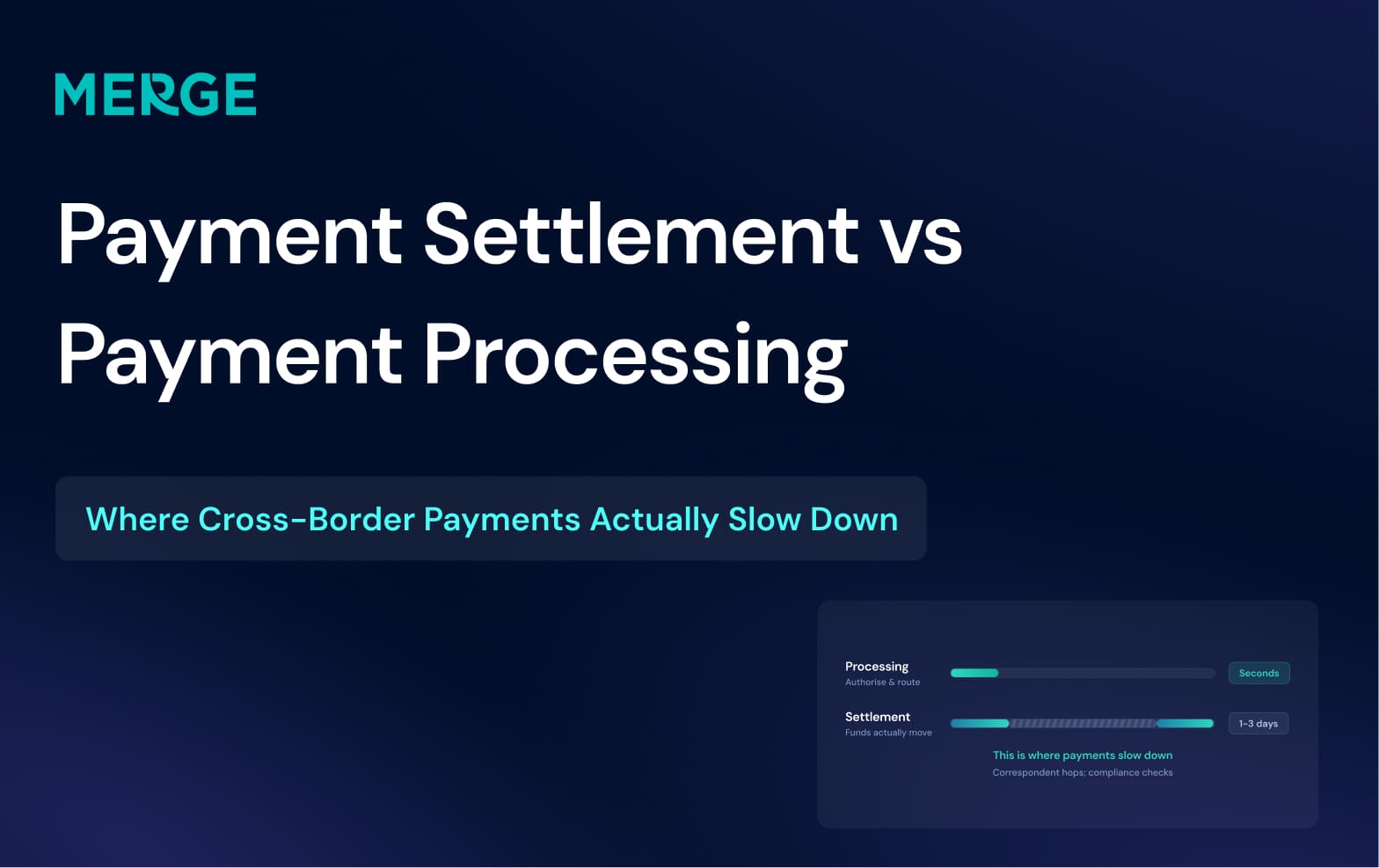
In 2026, developers face a real choice between traditional fiat rails and stablecoin rails. Fiat rails, such as SWIFT GPI and local ACH networks, remain familiar to recipients because funds arrive in bank accounts. SWIFT GPI offers tracking but still settles payments in one to two days, and wire fees of $15–$50 plus FX spreads are common. Local networks can be cheaper but vary by corridor. Regulatory frameworks are well‑established, so there is little risk in terms of legal clarity.
Stablecoin rails, by contrast, move value directly on chain. USDC or USDT transfers cost pennies and settle within minutes, any day of the week. There are no correspondent banks to slow payments. The trade‑off is compliance: both sides must follow crypto rules, and recipients need a wallet. Use traditional rails if your counterparties insist on bank deposits; use stablecoins if speed matters and the receiver can accept them.
The choice is not binary. Merge exemplifies a hybrid approach: developers can route transactions through fiat rails when paying suppliers with bank accounts and use stablecoin rails when paying Web3 companies or when speed is essential. This flexibility is crucial as cross‑border payment use cases diversify.
What to Consider When Choosing a Cross‑Border Payment API
Selecting a provider comes down to five factors: coverage, compliance, stablecoin support, pricing and developer experience.
- Coverage. Focus on the corridors you need today and in a year. A promise of 190 countries is meaningless if your priority routes are slow. Depth in your target markets counts more than breadth.
- Compliance. Check whether the provider handles KYC, AML and sanctions. Compliance‑native platforms such as Merge reduce your regulatory burden. If the API pushes compliance to you, budget for extra vendors and processes.
- Pricing. Fee models diverge at scale. Get quotes based on your anticipated monthly volume rather than launch volume. Transparent pricing, like Wise’s mid‑market model, helps with forecasting.
- Developer experience. API quality determines integration cost. Look for clear documentation, sandbox environments, SDKs and reliable webhooks. Saving weeks of engineering time often outweighs a small fee difference.
If you’re building cross‑border payments and need both stablecoin and fiat rails in one API, without managing a compliance stack, Merge is built for you. It settles on chain in minutes, pays out via local rails and covers major and emerging markets.
Explore Merge’s cross‑border payment API to see how you can send and receive money worldwide with a single integration.
FAQ
What is the best API for cross‑border payments in 2026?

The best cross-border payment API depends on your use case. Merge is a strong choice for regulated B2B fintechs that need stablecoin and fiat rails in one integration. Wise Platform is ideal for transparent FX and consumer-focused international payments. Airwallex suits businesses that need multi-currency accounts alongside payments. Nium is built for high-volume global payouts, while Stripe is the natural choice for businesses already using the Stripe ecosystem.
How do stablecoin rails compare to SWIFT for cross‑border API payments?
SWIFT-based payments can take one to several business days, and sometimes longer, depending on the markets, currencies, intermediary banks and compliance checks involved. Costs may include wire fees, correspondent charges and FX spreads. Stablecoin rails can settle within minutes and operate around the clock. However, recipients need compatible infrastructure, while SWIFT or local rails remain suitable when funds must arrive in a bank account.
What should businesses consider when choosing a cross-border payment API?
Compare corridor coverage, compliance support, payment methods, pricing and integration requirements. Strong coverage in the markets you actually use matters more than a large headline network. Check whether the API supports local rails, stablecoin-based payments and your preferred settlement currencies. Clear documentation, reliable support and transparent pricing can also reduce implementation time and ongoing operational costs.
Which cross‑border payment API has the best international payout coverage?
Nium offers payout capabilities to over 190 countries with more than 100 real‑time markets. Wise Platform covers 160 countries with strong consumer corridors. Merge is competitive across major and emerging markets and adds stablecoin settlement to its fiat coverage. The best coverage depends on where you need to pay.
Can I use a cross-border payment API for B2B stablecoin payouts?
Yes. A cross-border payment API can support B2B stablecoin payouts across eligible currencies and corridors. Merge enables businesses to send USDC, USDT and EURC, connect stablecoin settlement with local fiat rails, and manage payment workflows through one integration. Before sending funds, confirm the recipient supports the selected stablecoin and network, and that both parties meet applicable KYC, AML and local regulatory requirements.
Disclaimer: This content is intended for informational purposes only. It should not be considered financial, legal, or operational advice. Businesses should evaluate their own compliance, regulatory, and infrastructure requirements before implementing payment solutions.


Ready to see what Merge can do for you?
Related Articles