

Best Stablecoin Payment Providers in 2026
- Local rails and compliance matter: The best stablecoin payment providers combine broad local‑rail coverage, strong compliance and a clean API, not just the ability to move a token.
- Match the provider to the use case: Cross‑border payouts, collections, treasury, or marketplace splits each reward different strengths. Pick the provider that fits your flow rather than the biggest brand.
- Merge pairs stablecoin rails with fiat networks: Merge combines stablecoin settlement with local payment rails, built‑in compliance and a single API platform, so businesses can collect locally and pay out globally while senders and recipients keep transacting in fiat.
Cross-border payments are changing fast. Stablecoins have moved beyond crypto trading and are now part of how businesses collect funds, move money between countries and settle international transactions. For companies dealing with multiple currencies, long settlement times and high banking costs, stablecoin-based infrastructure offers a new way to move value globally.
This guide compares the best stablecoin payment providers in 2026. We look at coverage, compliance, API capabilities, reconciliation tools and pricing models. You'll see how leading stablecoin infrastructure companies differ, which use cases they serve best, and how businesses can use stablecoins for cross-border payments while continuing to operate in local fiat currencies.
What Is a Stablecoin Payment Provider?
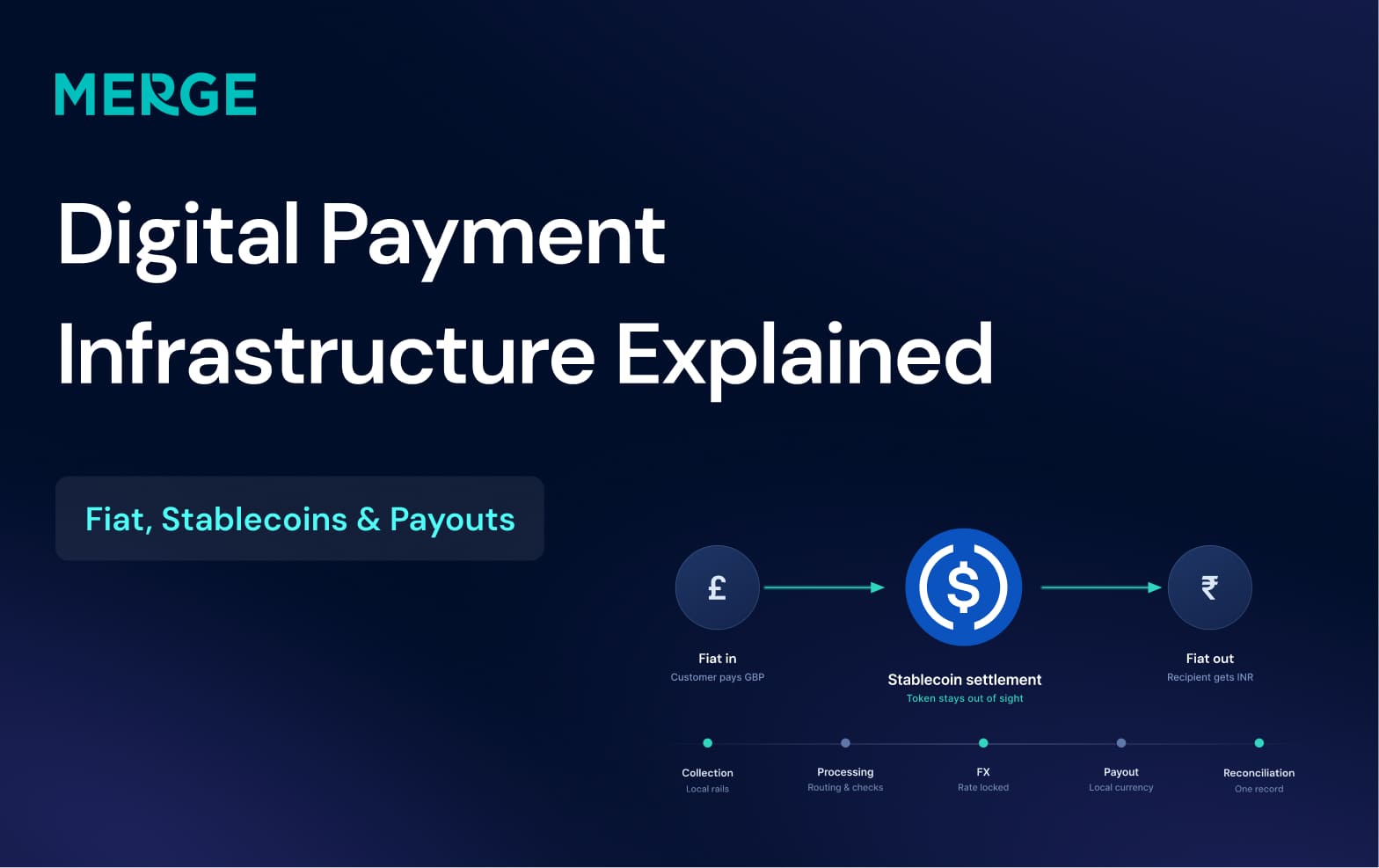
A stablecoin payment provider helps businesses send, receive or settle payments using stablecoins alongside local fiat rails. By converting value into a stablecoin in the middle and back to local currency at each end, these providers can deliver near‑instant cross‑border transfers with lower fees. The best firms pair stablecoin settlement with wide currency coverage, built‑in compliance, a developer‑friendly API and transparent pricing. Stablecoins such as USDC and USDT act as the settlement layer while businesses continue to price, invoice and account in familiar currencies.
How We Evaluated Providers
We assessed candidates using five practical criteria:
- Coverage: Does the provider support the local payment rails and currencies you need? A strong provider offers domestic collection and payout options (ACH, SEPA, PIX, Faster Payments, UPI and more) in multiple countries.
- Compliance: What licences and registrations do they hold? KYC/KYB, sanctions checks, transaction monitoring and ongoing regulatory supervision are essential in cross‑border finance.
- API & integration: A clear, well‑documented API and sandbox accelerate development. Unified endpoints and consistent webhooks reduce complexity.
- Reconciliation & reporting: Sub‑accounts, transaction matching, exception handling and exportable reports save finance teams from manual work.
- Pricing: Transparent fees and predictable models avoid surprises. Flat fees or published spreads beat opaque mark‑ups.
Best Stablecoin Payment Providers at a Glance
The best stablecoin payment providers in 2026 are: Merge, Circle, Ripple, and Stripe (Bridge). The comparison below summarises their focus, coverage, compliance and pricing. Always check each provider’s site for the latest details.
Merge
Merge pairs stablecoin settlement with domestic payment rails so that senders and recipients continue to transact in fiat. More than one hundred rails, including ACH, SEPA, PIX, Faster Payments, and more, are connected through a single API. Each payment converts local currency to a stablecoin in the middle and back again on the other side, enabling 24/7 settlement while avoiding foreign‑exchange accounts.
Merge includes KYC/KYB, PEP screening and sanctions checks on every transaction and is regulated as a Virtual Asset Service Provider by the Autorité des marchés financiers in France. Dedicated sub-accounts and structured payment data simplify reconciliation and accounting, and transparent, predictable pricing keeps costs clear. Businesses such as marketplaces, corporate treasury teams, fintechs, payroll platforms and banks use Merge to collect funds locally and disburse them globally without managing multiple bank relationships.
Circle
Circle operates the regulated stablecoins USDC and EURC and runs the Circle Payments Network (CPN). The network connects payment providers and financial institutions across more than twenty blockchains and traditional payment rails. Participants can mint and redeem stablecoins, move balances across chains and off‑ramp to fiat.
Circle vets every participant’s licence and risk profile and enforces the travel rule; a trust engine lets institutions set counterparty risk rules. Real‑time settlement via stablecoins reduces the need for pre‑funded accounts and unlocks trapped capital while enabling third‑party payouts. Circle suits fintechs and payment service providers that need compliant digital‑currency rails and broad blockchain coverage. Pricing is volume‑based.
Ripple
Ripple Payments offers a modular suite that handles collection, holding, exchange and payout of both fiat and stablecoins. Businesses can receive funds in stablecoins or local currency, provision virtual accounts, convert currencies 24/7 and send payouts in minutes.
The network spans a broad global payout footprint and removes the need for pre-funding by moving value as stablecoins between domestic rails. Ripple holds 75+ money-transmitter and equivalent licences globally and is pursuing e-money licences in Europe and the UK. Its compliance, security and liquidity features make it attractive to remittance providers, marketplaces and platforms seeking an end‑to‑end cross‑border payment solution.
Stripe (Bridge)
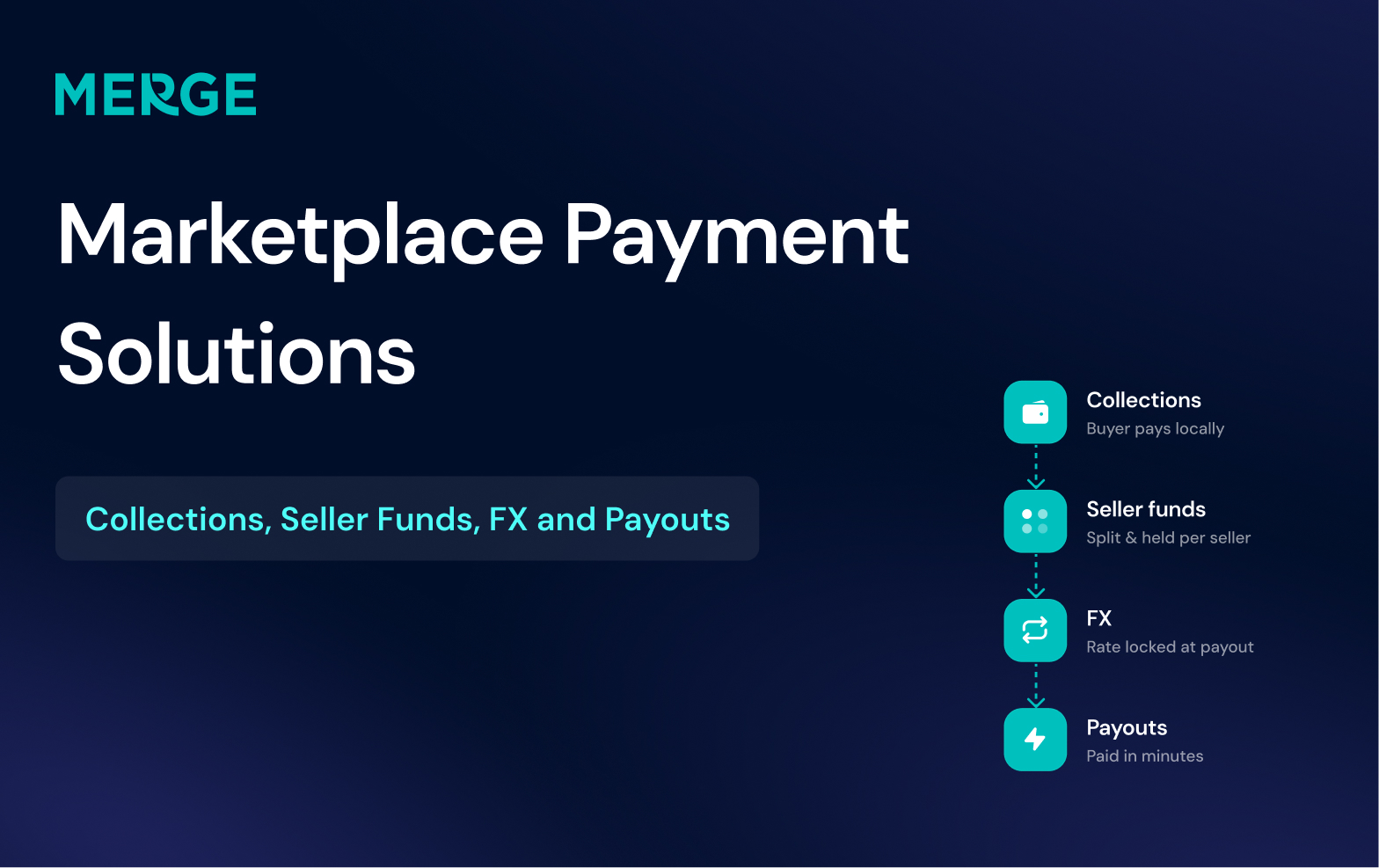
Bridge is Stripe’s stablecoin infrastructure platform for cross-border money movement. It gives businesses APIs to move, store, convert and pay out stablecoins as part of existing payment flows, without building blockchain infrastructure directly.
For cross-border payments, Bridge can support a fiat-to-stablecoin-to-fiat flow. A business can collect local currency, convert it into a stablecoin, move value across blockchain rails and pay out to the recipient in their local currency. This makes it useful for supplier payments, remittances, marketplace payouts, treasury transfers and global platform payments.
Bridge handles the technical and operational layer behind these flows, including wallets, stablecoin movement, conversion and payment orchestration. Since its acquisition by Stripe, it has become part of Stripe’s broader stablecoin infrastructure for businesses that need faster, programmable and more flexible international payments.
Why Businesses Are Adopting Stablecoin Payments
Businesses are not looking at stablecoins only because they are new. They are looking at them because cross-border payments still create practical problems. Money can take days to arrive. Fees are hard to predict. FX spreads are often unclear. Finance teams then spend extra time tracking payments across banks, portals and spreadsheets.
Stablecoin payment providers address those issues by using stablecoins as a settlement layer between local fiat payment rails. The sender can pay in local currency. The recipient can receive local currency. The stablecoin moves value in between, often outside banking hours.
This is why stablecoin cross-border payments are gaining traction across marketplaces, fintechs, payroll platforms, digital asset businesses and treasury teams.
How to Choose a Stablecoin Payment Provider
When evaluating providers, start with your actual workflow. Do you need to collect payments in one country and pay them out elsewhere? Are you a marketplace splitting customer funds among sellers? Or do you manage corporate treasury across multiple currencies? Match these needs to the criteria above: coverage, compliance, API quality, reconciliation and pricing.
Verify the provider’s licences and KYC/KYB procedures, examine their documentation and webhooks, and ask about sub‑accounts and reporting. Transparent pricing is another key differentiator; published flat fees or clear spreads beat opaque mark‑ups. Choose the provider that best aligns with the countries, currencies and flows you serve.
Stablecoins Are Becoming Part of the Global Money Movement
The future of money transfer will be judged by cost, speed and access. The G20 has already set clear targets: by the end of 2027, global average retail cross-border payment costs should be no more than 1%, and 75% of retail cross-border payments should reach the recipient within one hour.
Remittances have a separate 2030 target. The global average cost of sending a $200 remittance should fall below 3%, with no corridor above 5%. That matters because current cross-border payments still carry high fees, slow settlement and limited transparency.
Stablecoins fit into this gap. Stablecoins can offer lower costs and faster transaction speed, especially for cross-border payments. The future is likely to be hybrid: local fiat rails at the edges, stablecoins for settlement in the middle, and compliance built into every flow.
For businesses, this is the practical shift. Stablecoin payment providers can help them collect locally, move value across borders outside banking hours and pay out globally with better control.
Choosing the Right Stablecoin Payment Provider
The best stablecoin payment providers combine local rail coverage, compliance, API quality, reconciliation and clear pricing. Token support matters, but it is only one part of the decision.
Stablecoins are becoming a practical settlement layer for cross-border payments. The strongest model is simple: collect locally, settle through stablecoins, where it adds speed, then pay out through local rails.
Merge is built for this flow. Its single API platform connects stablecoin rails with local fiat payment networks, with compliance and reconciliation built in.
Talk to Merge or explore the API to see how stablecoin-based payments can support your cross-border strategy.
FAQ
What is a stablecoin payment provider?

A stablecoin payment provider lets businesses send, receive and settle payments using stablecoins alongside local fiat rails. It can convert local currency into a stablecoin for settlement, then convert it back into local currency for payout. The best providers combine wide coverage, compliance checks, reliable APIs, reconciliation tools and clear pricing.
What should you look for in the best stablecoin payment provider?
Look at local rail coverage, supported currencies, licensing, compliance controls, API quality, reconciliation and pricing. A good provider should support your actual flow, whether that means cross-border payouts, collections, treasury transfers or marketplace settlements. Do not choose by brand name alone. Choose the provider that fits your corridors, volumes and compliance needs.
How do stablecoins work for cross-border payments?
Stablecoin-based providers use stablecoins as the settlement layer between two local payment rails. The sender pays in local currency, the provider settles value as a stablecoin, and the recipient receives local currency. This can reduce delays, lower costs, and keep both sides operating in fiat, without requiring the payer or payee to manage digital assets.
Are stablecoin payment providers regulated?
Regulation depends on the provider and the countries involved. Always check licences, registrations and compliance processes before choosing a provider. Strong providers usually include KYC/KYB, sanctions screening, transaction monitoring and reporting workflows. For businesses, regulation matters as much as speed, especially when payments cross borders or involve high-value B2B flows.
Who provides the best modular cross-border payments solution?
The best modular cross-border payments solution depends on your use case. Merge is built for businesses that need one API for accounts, swaps, stablecoin settlement and payouts. Circle, Ripple, and Stripe each serve different flows. Compare providers by coverage, compliance, pricing, API quality and whether they support your actual payment model.
Disclaimer: This content is intended for informational purposes only. It should not be considered financial, legal, or operational advice. Businesses should evaluate their own compliance, regulatory, and infrastructure requirements before implementing payment solutions.