Five Ways AI and Stablecoins Will Reshape Treasury Management
From real-time cash forecasting to instant satisfaction - how the convergence of artificial intelligence and regulated digital dollars is creating programmatic treasury operations.
Corporate treasury has always been about managing uncertainty - predicting cash needs, moving money across borders, hedging currency risk, reconciling transactions. These functions haven't fundamentally changed in decades, even as the tools have evolved from ledgers to spreadsheets to enterprise systems.
But two technologies are now converging that could rewrite the rules entirely: artificial intelligence capable of continuous optimization, and stablecoins - digital dollars that settle instantly, operate 24/7, and can execute logic automatically. Together, they point toward a future of programmatic treasury: finance operations that run continuously, adapt in real-time, and require human judgment only for strategic decisions.
Here are five specific areas where this transformation is already beginning.
1. Cash Forecasting: From Quarterly Guesswork to Continuous Intelligence
Cash forecasting has been treasury's top priority for five consecutive years, yet accuracy remains stubbornly low. While treasurers achieve 86% accuracy for short-term forecasts (under one month), more than half consider their forecasts beyond six months to be inaccurate. The root cause: forecasts rely on data that's already stale by the time it's consolidated.
AI models trained on historical patterns can reduce forecast error by up to 50%. But the real unlock comes when those models receive real-time transaction data from stablecoin payment rails - eliminating the batch processing delays that corrupt inputs in the first place.
2. Cross-Border Settlement: From Days to Minutes
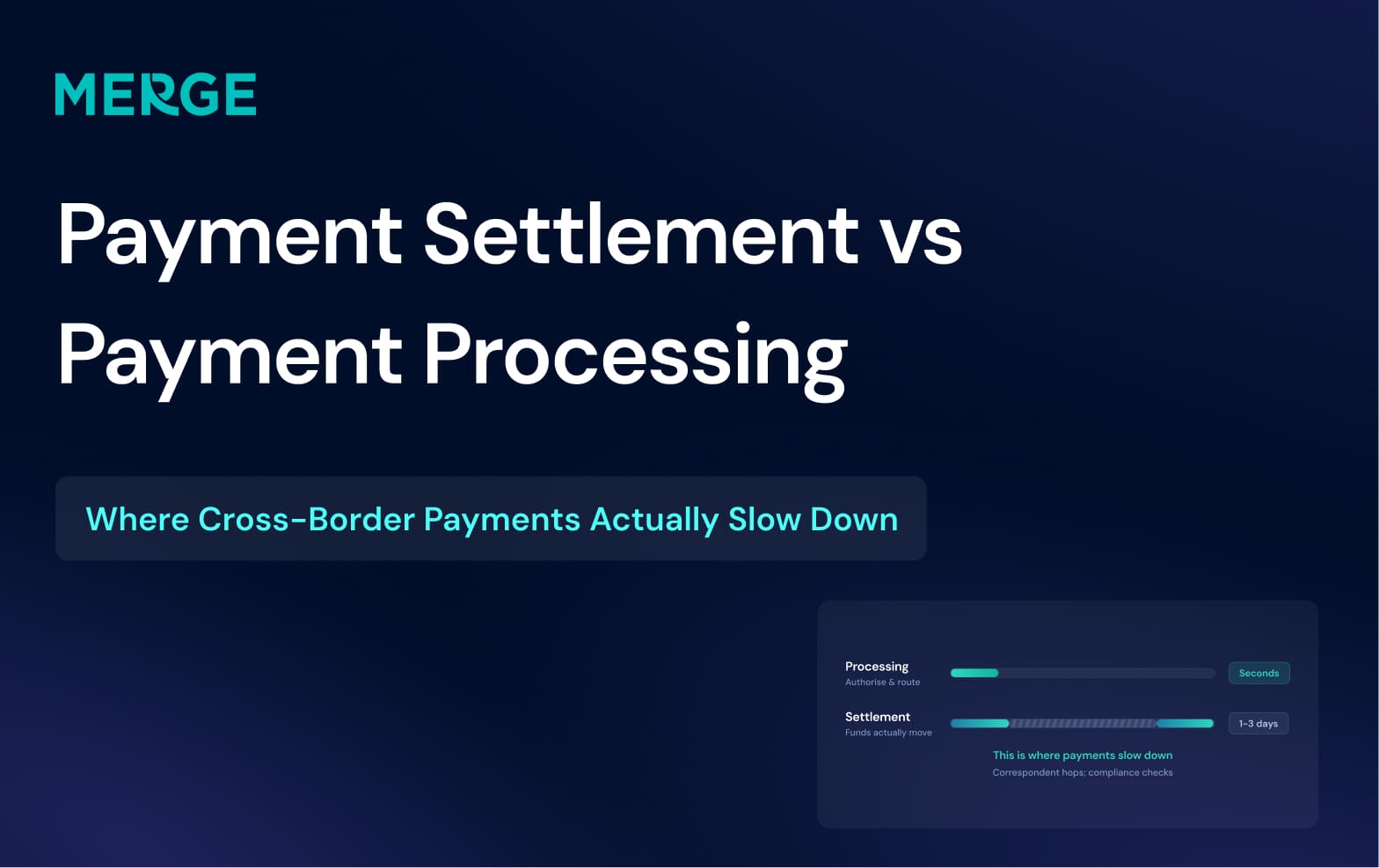
Cross-border payments have improved dramatically over the past decade. Nearly 60% of SWIFT gpi payments now reach beneficiary banks within 30 minutes. Yet for B2B transactions, 46% still take more than a day to credit recipients - and 75% of payments still route through at least one intermediary bank.
The bottleneck isn't the network itself - it's the domestic "last mile." Eighty percent of total payment time occurs after funds leave SWIFT, due to local regulations, bank infrastructure limitations, and market practices. Stablecoin rails sidestep this entirely: settlement happens on-chain, 24/7, with finality measured in minutes rather than days.
3. Trapped Cash: Unlocking Global Liquidity
Multinational corporations routinely hold billions in cash they can't easily access - restricted by FX controls, capital requirements, tax implications, and operational complexity. This isn't truly "trapped" money; it's hampered money, requiring manual effort and coordination to mobilize.
The combination of 24/7 stablecoin liquidity and AI-driven optimization changes the calculation. Treasury teams can centralize cash more frequently, put excess balances to work automatically, and respond to liquidity needs in real-time rather than waiting for banking hours across multiple time zones.
4. FX Risk: From Periodic Hedging to Continuous Optimization
FX volatility remains the top risk concern for corporate treasurers, cited by 83% in recent surveys. Traditional hedging programs operate on quarterly cycles, using bulk forward contracts that create timing mismatches between when exposures arise and when hedges execute.
AI enables continuous portfolio-level optimization, accounting for currency correlations and adjusting positions daily rather than quarterly. Combined with stablecoin payment rails, companies can embed FX conversion directly into settlement - executing at the optimal moment rather than hedging in advance against uncertain timing.
5. Reconciliation: From Manual Matching to Self-Auditing Transactions
Reconciliation consumes enormous resources. A typical 1,000-person company spends 100,000 hours annually on reconciliation tasks - $3-5 million in direct labor costs. Even with automation, the last 1-3% of exceptions can take a full day to resolve.
Stablecoins fundamentally reframe the problem. Smart contracts can verify conditions before releasing payment, embed invoice references in transaction metadata, and reconcile automatically against expected payments. Analysis suggests stablecoin-based treasury operations can reduce manual processes by 85% with 99.9% execution accuracy.
Summary: The Path to Programmatic Treasury
What This Means for CFOs
The technologies enabling programmatic treasury aren't theoretical - they're operational today for early adopters. Regulated stablecoins like USDC and PYUSD are being used by Fortune 500 companies for cross-border payments. AI-powered forecasting is reducing errors for multinationals. Smart contracts are automating conditional payments.
The goal isn't to replace human judgment in treasury. It's to focus that judgment where it matters most: strategic decisions about capital allocation, risk appetite, and business growth. The machines can handle the matching.
For enterprises ready to move beyond pilots, infrastructure providers like Merge are building the bridge between traditional treasury operations and stablecoin-powered finance. Merge offers a platform that enables global companies to access the benefits of modern stablecoin technology - instant cross-border payments, 24/7 settlement, and real-time visibility - while operating within a framework of institutional-grade compliance. Fully licensed by top-tier regulatory bodies, Merge provides the security and oversight that CFOs and treasurers require before integrating digital assets into core financial operations. It's the kind of infrastructure that transforms stablecoins from an interesting experiment into a practical tool for programmatic treasury.
Data sources: Deloitte Global Corporate Treasury Survey 2024, PwC Global Treasury Survey 2025, Strategic Treasurer Cash Forecasting Survey 2025, FSB Cross-Border Payments Report, McKinsey Stablecoins Analysis 2025
Disclaimer: This content is intended for informational purposes only. It should not be considered financial, legal, or operational advice. Businesses should evaluate their own compliance, regulatory, and infrastructure requirements before implementing payment solutions.

Ready to see what Merge can do for you?
Related Articles